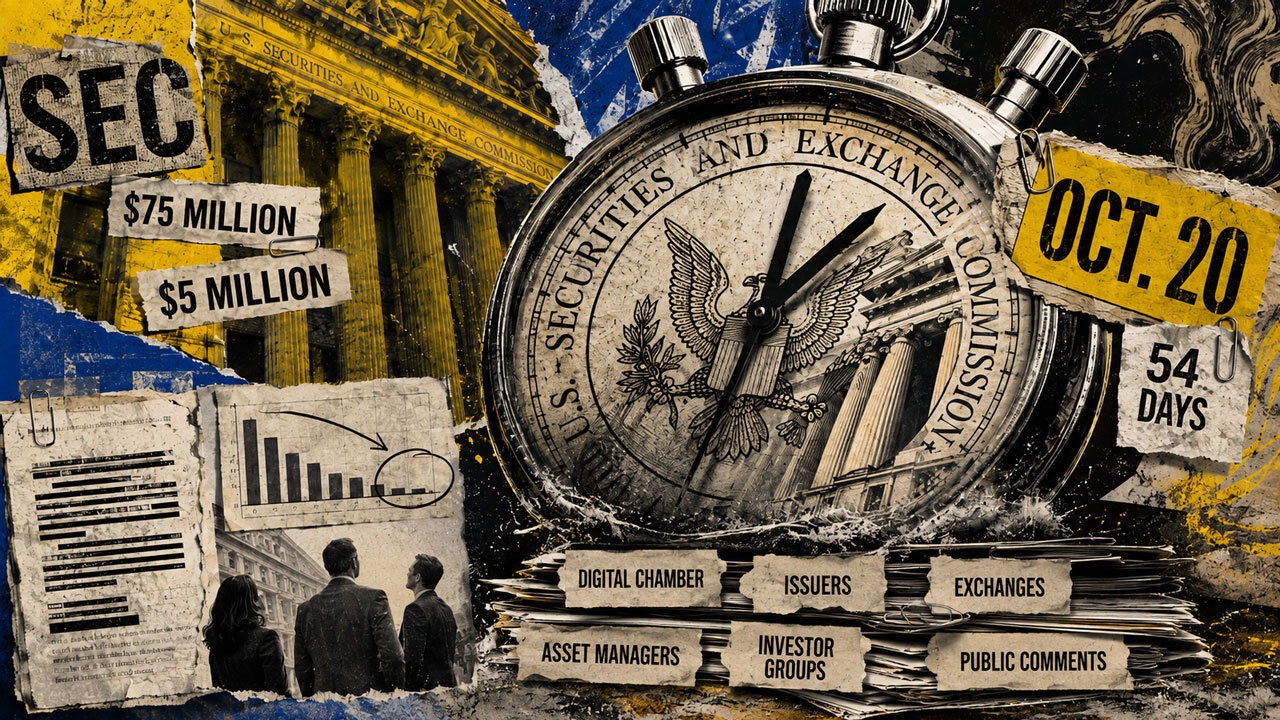
Crypto startups and stakeholders have exactly 54 days left to submit public comments regarding the Securities and Exchange Commission's (SEC) proposal to implement a $75 million cap on certain fundraising exemptions. This deadline marks a pivotal moment for the industry to shape the regulatory framework governing "mini-IPOs" and alternative capital-raising methods often used by early-stage blockchain projects to bypass traditional, more expensive registration processes.
Currently, the SEC docket for this proposal shows a surprising lack of participation from major industry entities. As of the most recent filings, no major crypto exchanges, institutional asset managers, large-scale token issuers, or established venture capital groups have filed formal responses. This silence is notable given that the proposed cap could significantly limit the scale at which decentralized projects and infrastructure providers can raise funds from the public without undergoing a full, traditional IPO process.
The proposal comes at a time of heightened tension between the SEC and the digital asset sector over the definition of securities and the requirements for compliant offerings. While the $75 million limit is intended to provide a streamlined path for smaller companies to raise funds, industry experts often argue that such caps fail to account for the high capital requirements of building global, decentralized blockchain networks. The absence of input from large-scale players suggests a potential disconnect between the regulatory timeline and the industry's lobbying efforts.
For U.S.-focused crypto entrepreneurs, the outcome of this comment period will dictate the feasibility of future Regulation A+ offerings. These offerings have historically served as a bridge between private seed rounds and public liquidity. If the industry fails to advocate for higher limits or more flexible disclosure requirements during this 54-day window, the $75 million ceiling could become a permanent fixture, potentially forcing larger projects to seek capital in more favorable international jurisdictions.
Investors and founders should watch for a late-stage surge in filings from advocacy groups like the Blockchain Association or Coin Center as the deadline approaches. A lack of coordinated pushback may be interpreted by the SEC as a tacit acceptance of the current proposal, leading to a swift implementation. Monitoring the public docket over the coming weeks will be essential to see if the industry's major stakeholders decide to challenge the SEC's restrictive stance on capital formation.