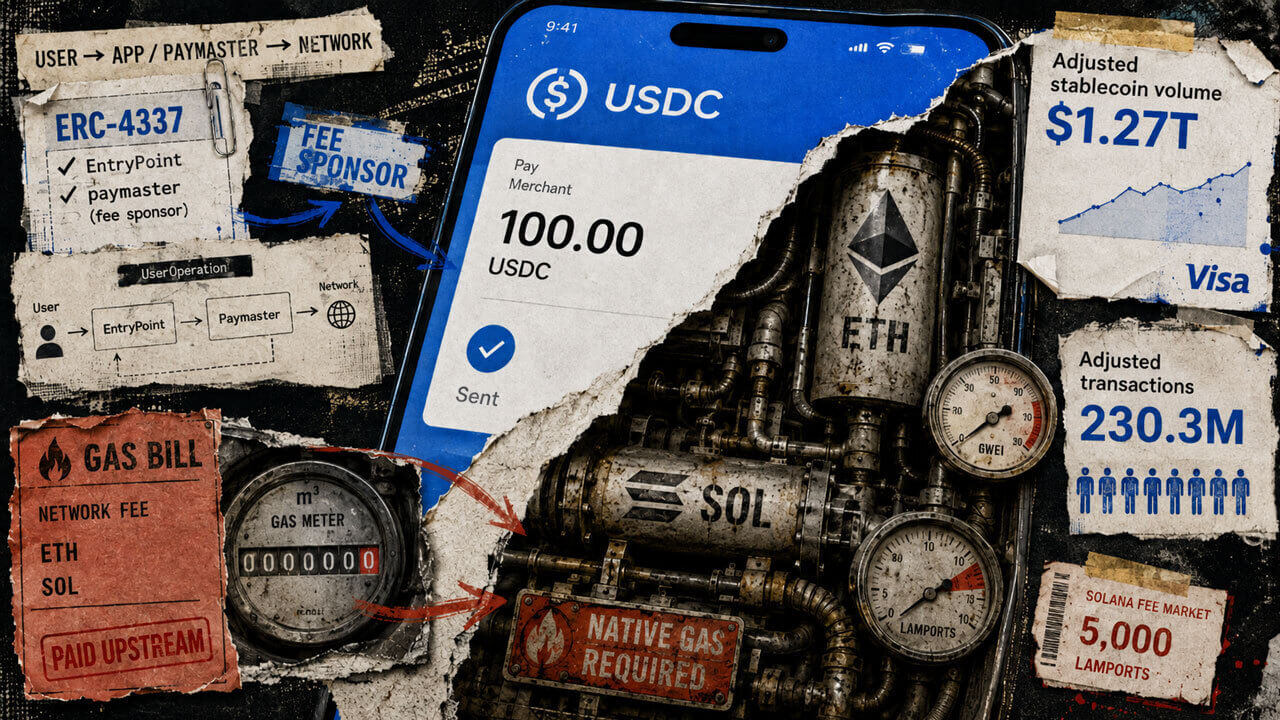
Paymasters affect direct consumer demand by acting as intermediaries that handle protocol fees, effectively making native tokens like ETH and SOL invisible to the end user. Through account abstraction and sponsored transactions, developers allow users to pay for fees in stablecoins or even bypass them entirely at the interface level. This means that while trillions of dollars in volume flow through Ethereum and Solana, the average consumer may no longer need to purchase or hold the underlying native assets to interact with decentralized applications.
This shift toward 'invisible crypto' is a response to the long-standing hurdle of gas fees, which has historically hindered mainstream adoption. By utilizing ERC-4337 on Ethereum or similar fee-payer structures on Solana, dApps can offer a user experience that mirrors traditional web applications. However, this creates a paradox where network utility increases exponentially, yet the traditional 'buy-and-hold' utility for native tokens diminishes for the retail sector.
From a market perspective, this transition shifts the demand for ETH and SOL from individual consumers to service providers and paymaster contracts. These entities must still maintain balances of native tokens to settle transactions at the protocol level, but the lack of direct retail interaction could change how these assets are valued. Investors are now forced to consider whether institutional-level fee fulfillment can replace the massive, fragmented demand previously generated by millions of individual wallet holders.
Moving forward, US investors and developers should monitor how fee abstraction impacts the tokenomics of these leading blockchains. Key metrics to watch include the percentage of transactions handled by paymasters and whether the resulting increase in total network activity leads to enough secondary demand—such as staking or burning—to offset the loss of direct retail utility. The ultimate success of this model depends on whether high-volume, sponsored activity can sustain token value better than the friction-heavy model of the past.