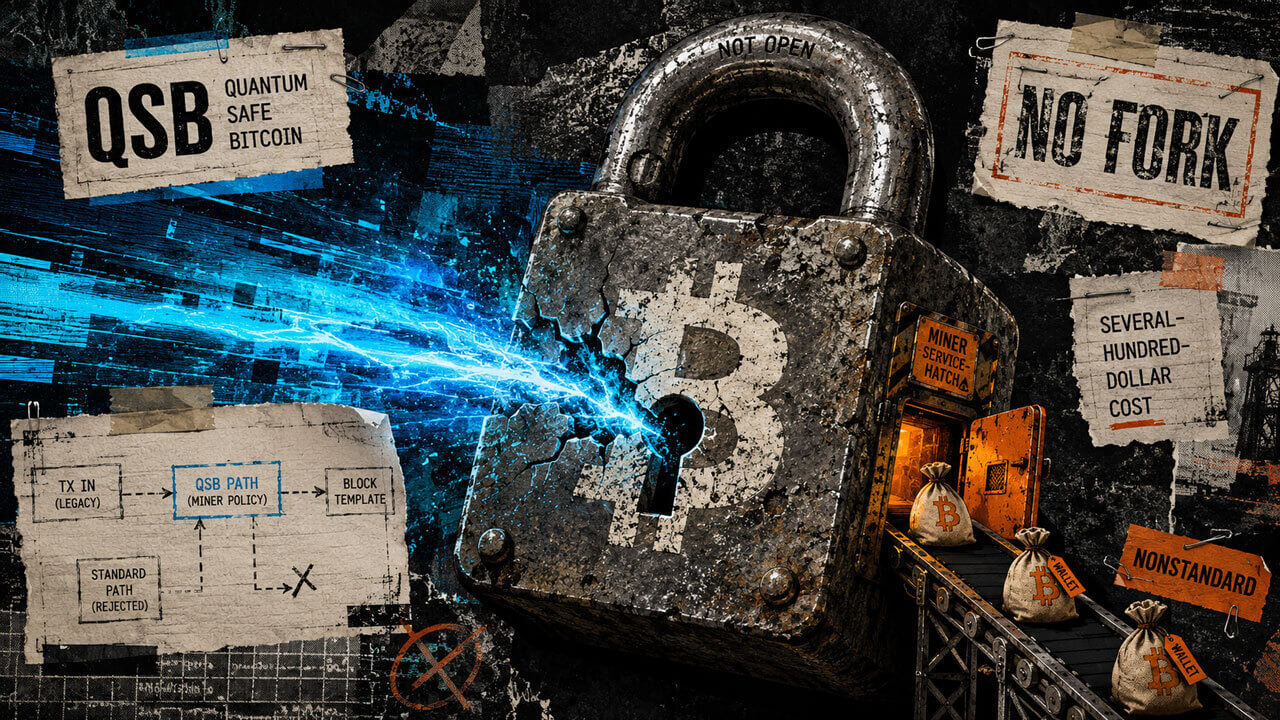
The recent successful consensus of a Quantum-Safe Bitcoin (QSB) transaction on the Bitcoin mainnet marks a critical milestone in network security, yet it fails to protect nearly one-third of the total supply. Roughly 7 million BTC are currently vulnerable because their public keys are already visible on the blockchain, primarily within legacy Pay-to-Public-Key (P2PK) addresses or reused addresses. Because quantum computers can derive private keys from exposed public keys, these 'exposed' coins cannot utilize the new escape route unless they are moved to updated, quantum-resistant address types before a functional quantum threat emerges.
Technically, the QSB transaction demonstrated that post-quantum cryptographic signatures can be processed on the existing Bitcoin blockchain. However, the path to full implementation faces significant hurdles. Currently, these transactions are categorized as 'nonstandard,' meaning they are not relayed by the majority of network nodes and must be submitted directly to cooperative miners. Additionally, the high computational costs and increased data size required for quantum-safe signatures could lead to higher transaction fees and increased bloat on the Bitcoin ledger.
For U.S. investors and institutional custodians, this development highlights a long-term existential risk that is finally being addressed at the code level. While quantum computers capable of breaking Bitcoin’s ECDSA encryption are likely years away, the 'harvest now, decrypt later' strategy employed by sophisticated actors makes current vulnerabilities a matter of financial and national security. U.S. regulators are likely to view the success of these technical safeguards as a necessary step for the long-term viability of Bitcoin as a regulated financial asset.
Moving forward, the market should watch for the development of standardized relay rules that would allow all nodes to support quantum-resistant transactions. Investors should also monitor the activity of 'Satoshi-era' coins; if these legacy funds remain stationary, they will be the most at-risk assets during a quantum transition. The success of the QSB test is a positive signal for Bitcoin’s adaptability, but the transition period will require proactive user action to secure millions of BTC currently sitting in outdated wallet structures.