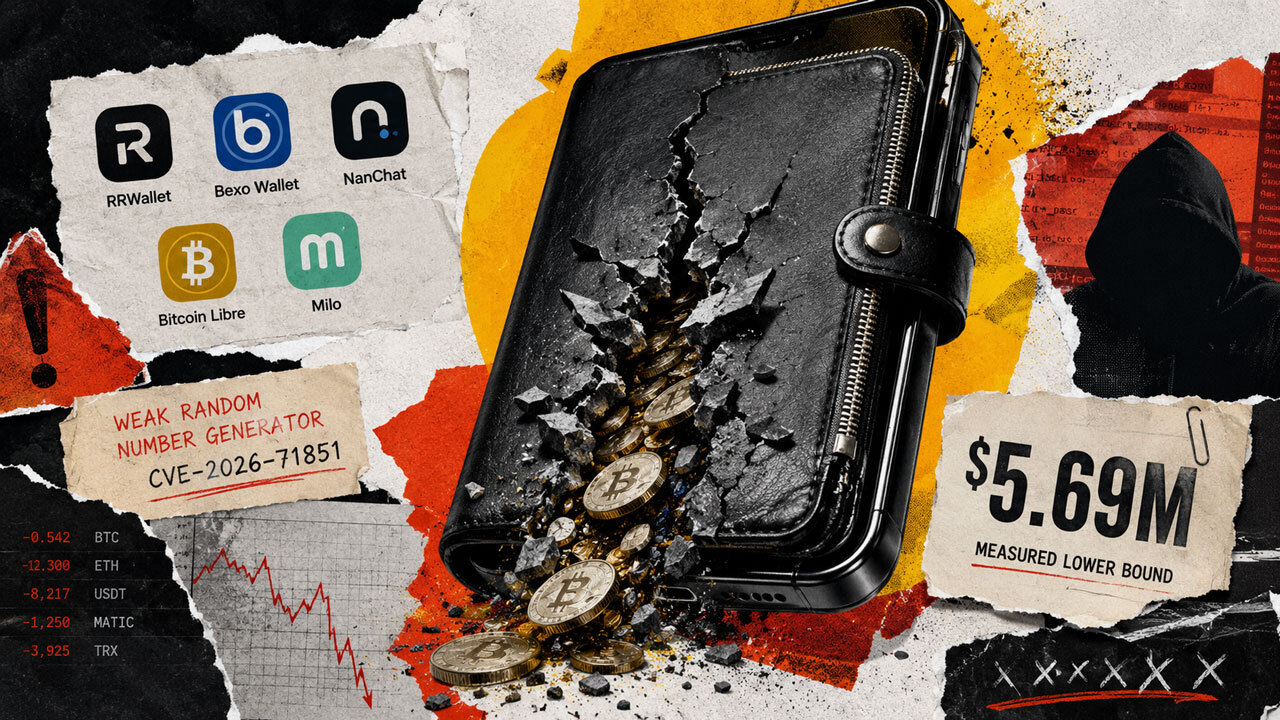
Crypto users have lost at least $5.69 million due to a critical vulnerability where wallet recovery phrases—also known as seeds—were generated using predictable patterns rather than true randomness. This lack of entropy allowed attackers to brute-force or guess the phrases, gaining total control over the associated funds. Because the seed phrase is the foundational cryptographic key for a wallet, a simple app update cannot secure a phrase that was generated under these compromised conditions; the only solution is to abandon the old wallet entirely.
The incident highlights a recurring technical failure in the crypto ecosystem regarding 'entropy,' which is the randomness required to make cryptographic keys secure. While modern hardware and software wallets are designed to be virtually impossible to crack, any software that uses weak algorithms or limited data sets to generate 12-to-24-word phrases creates a backdoor for hackers. This specific exploit underscores the risks inherent in using less-audited wallet providers or older software versions that may not adhere to current industry standards for cryptographic security.
For US-based investors and the broader market, this event serves as a sobering reminder of the responsibilities tied to self-custody. While US regulators like the SEC and CFTC focus heavily on exchange-level security and fraud, individual vulnerabilities in self-custody software often leave users with zero legal or technical recourse once funds are drained on-chain. Such losses can dampen retail confidence in DeFi and self-sovereign finance, as the 'be your own bank' ethos requires a level of technical due diligence that many casual users may not yet possess.
Moving forward, investors should monitor security advisories from their specific wallet providers to see if their software version was affected by this entropy flaw. If a wallet was created using an affected version, the only way to protect assets is to generate a new, secure recovery phrase on a trusted platform and manually transfer all tokens. The industry will likely see increased pressure on wallet developers to undergo more frequent security audits and provide greater transparency regarding their seed generation processes.