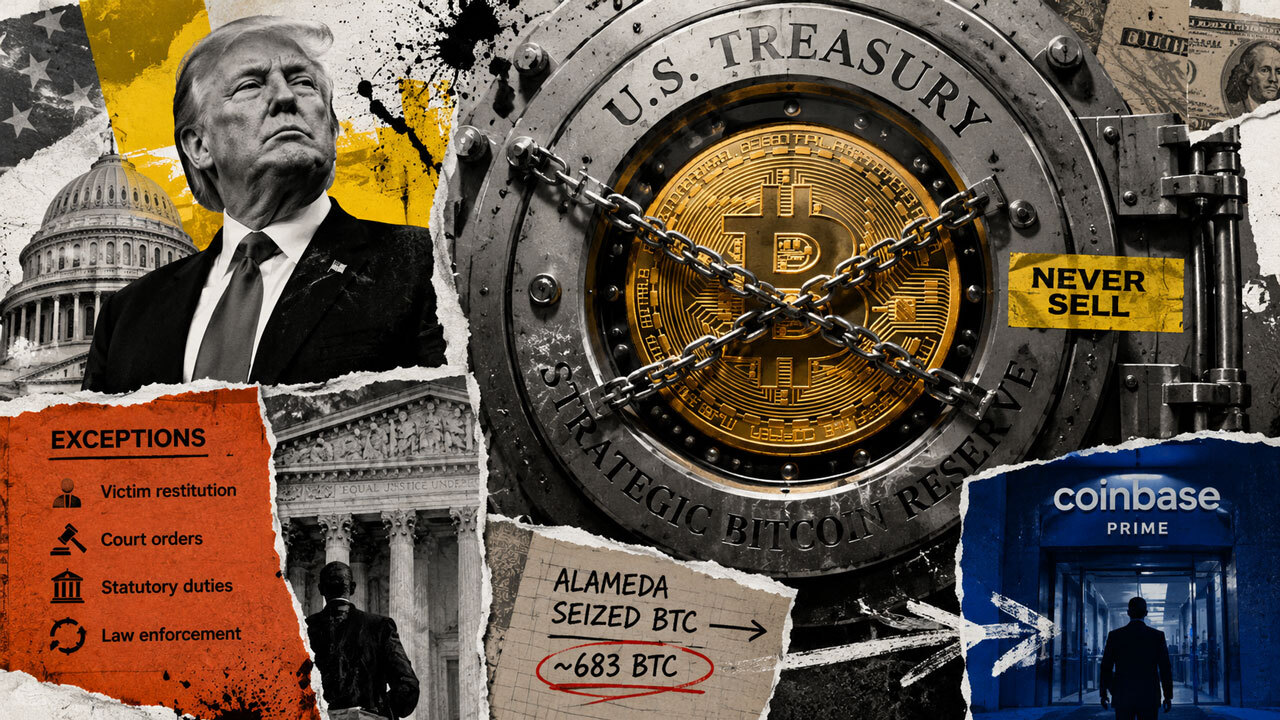
Recent wallet activity from the US government involving Bitcoin seized from Alameda Research underscores that current asset forfeiture mandates remain the default operating procedure, regardless of political proposals. Trump’s 'never sell' pledge for a Strategic Bitcoin Reserve would likely face significant legal hurdles unless specific legislation is passed to reclassify forfeited assets. Currently, the US government treats seized crypto as criminal proceeds subject to liquidation, rather than a strategic national treasury asset.
The specific movement involved a small amount of BTC linked to assets seized from Binance.US accounts associated with FTX’s sister company, Alameda Research. Such transfers often precede larger liquidations, which has historically caused short-term market anxiety. The US government remains one of the world's largest Bitcoin holders due to law enforcement actions, and its move to consolidate or transfer these funds indicates that the current administration is following existing protocols for asset disposal.
During his 2024 campaign, Donald Trump vowed that his administration would retain 100% of all Bitcoin currently held or acquired by the US government. However, crypto analysts point out that much of the 'government stash' consists of forfeited funds intended for victim restitution. To fulfill a 'never sell' promise, a new administration would need to navigate the 'fine print' of the Civil Asset Forfeiture Reform Act and potentially pass the Bitcoin Act proposed by Senator Cynthia Lummis.
For investors, the immediate takeaway is that political rhetoric has not yet changed the mechanical reality of government wallet management. Until a formal strategic reserve is codified into law, the market should expect continued volatility whenever government-tagged wallets become active. The contrast between Trump’s promises and current DOJ actions serves as a reminder that the path to a national Bitcoin treasury involves complex regulatory and legislative shifts beyond executive orders.