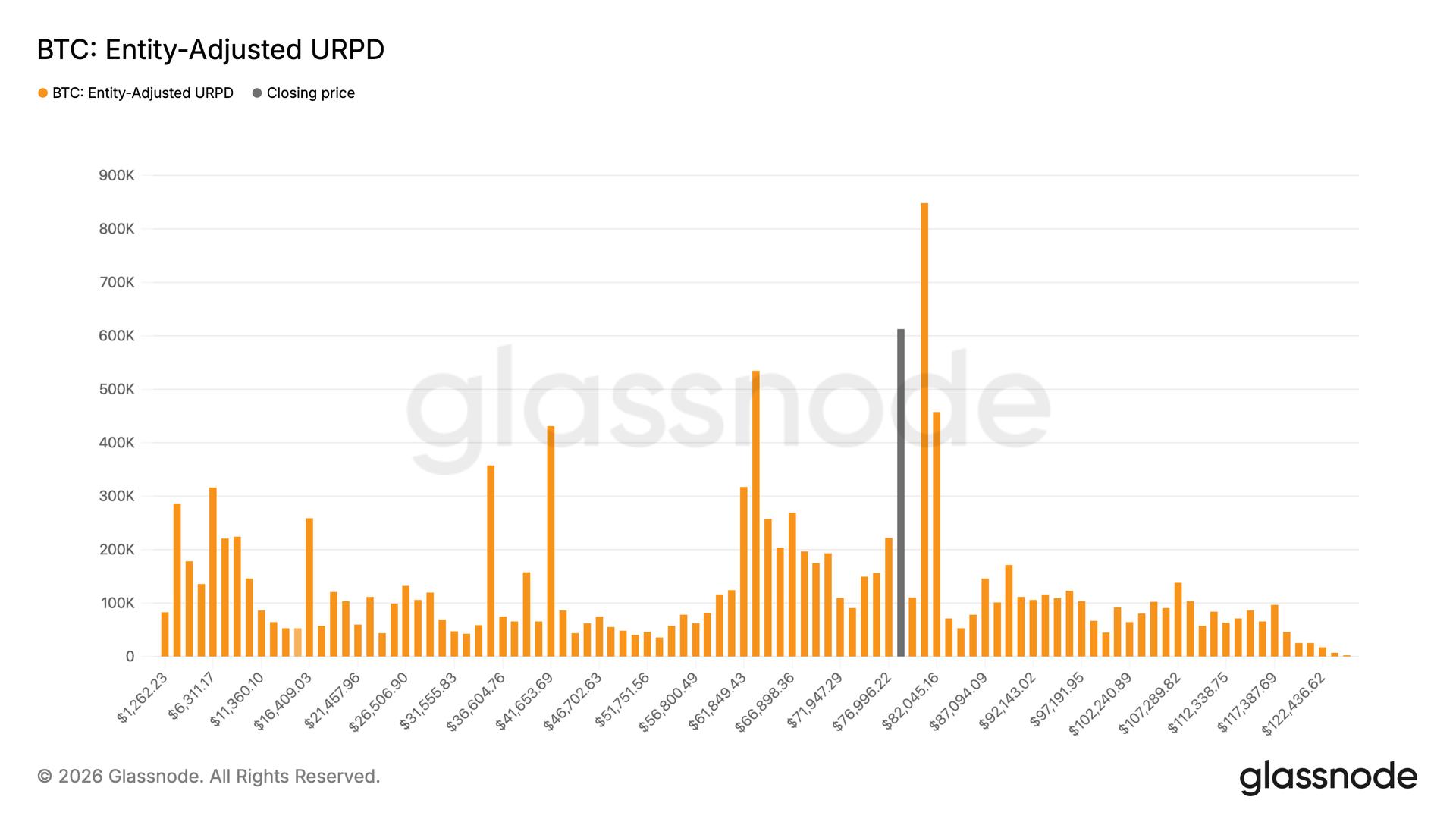
Bitcoin's climb toward $80,000 represents a pivotal moment because it aligns with a massive supply wall where a high volume of coins were previously transacted. For US-based spot Bitcoin ETF holders, this level is particularly significant as it nears their aggregate average purchase price. This creates a scenario where a large number of institutional and retail participants may choose to exit their positions at break-even, potentially increasing sell-side pressure and stalling upward momentum.
The technical setup is further complicated by the 50-week moving average, a key long-term trend indicator that currently converges with this supply zone. Historically, Bitcoin's ability to hold above or below this moving average has dictated multi-month market sentiment. The fact that the largest concentration of overhead supply sits exactly at this technical juncture makes $80,000 the most formidable hurdle for bulls in the current market cycle.
For US investors and policy observers, the behavior of spot ETFs at this price point serves as a critical bellwether for institutional appetite. Since their debut in early 2024, these ETFs have become the primary engine for Bitcoin's price discovery. If the market can absorb the selling pressure at $80,000 and flip it into a support level, it would signal that institutional holders are transitioning from short-term speculators to long-term strategic investors.
Moving forward, market participants should closely monitor daily candle closes above the $80,000 mark and track net inflow/outflow data from major ETF providers like BlackRock and Fidelity. A clean break above this supply wall, backed by sustained ETF inflows, would likely clear the path for a move toward new all-time highs. Conversely, a rejection at this level could lead to a period of consolidation as the market retests lower support zones near the $70,000 range.