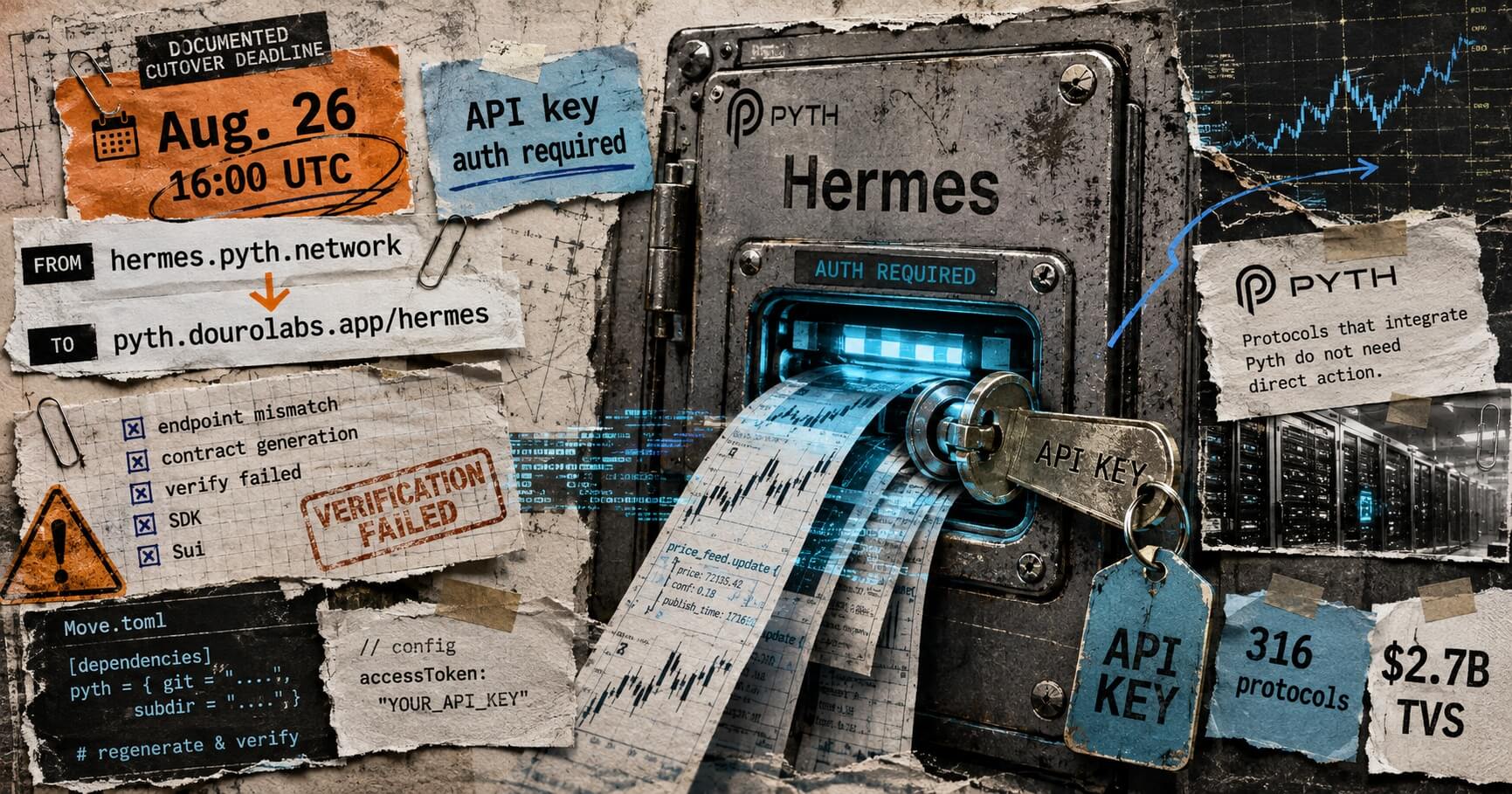
The Pyth Network API overhaul requires urgent patches because the transition to a key-based access model could prevent unpatched smart contracts from accessing critical real-time price data. With over 300 DeFi protocols relying on Pyth oracles for market pricing, failure to implement these updates—including new API keys and specific software development kit (SDK) alignments—could result in "frozen" contracts. These contracts would be unable to execute trades, liquidations, or lending functions without the necessary data inputs, posing a significant risk to the stability of the affected platforms.
For developers, the overhaul necessitates a coordinated synchronization across several technical layers. Specifically, builders on the Sui blockchain must align their SDKs, endpoints, and on-chain packages to remain compatible with Pyth’s new infrastructure. This shift marks a strategic move toward a more controlled and sustainable data distribution model, but it places an immediate maintenance burden on protocol teams to ensure their systems do not lose connection to the oracle network.
This development highlights the structural risks within the DeFi landscape, where heavy reliance on third-party oracles like Pyth creates potential single points of failure. For US-based users and institutional investors, the reliability of these price feeds is paramount; a widespread freeze across hundreds of protocols could trigger market volatility or unexpected liquidations if price data becomes stale or inaccessible during a period of high market activity.
As the deadline for this overhaul approaches, the industry should closely monitor the speed at which these 300 protocols transition to the new API model. Any delays in patching could lead to temporary service disruptions, particularly on high-throughput networks like Sui. Investors and users should verify that their preferred platforms have confirmed compatibility with the new Pyth API to avoid potential issues with asset withdrawals or trade executions.