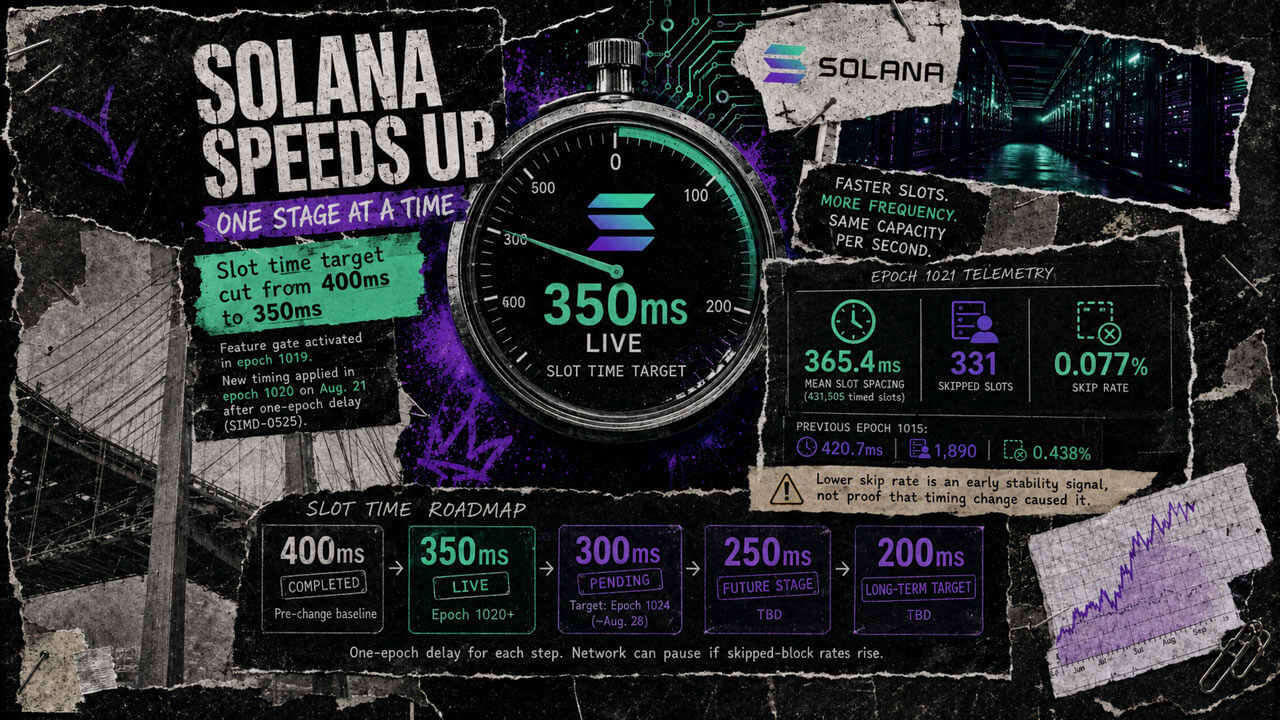
Solana has successfully reduced its average block confirmation time to 365.4 milliseconds during Epoch 1021, marking a major step toward consistent sub-second speeds. This performance upgrade was accompanied by a remarkably low skip rate of 0.077%, indicating that the network is maintaining high stability even as it pushes for faster throughput. While the final target of 300-millisecond block times remains in the pending stage, this latest data confirms that Solana is actively optimizing its infrastructure to handle higher transaction volumes with minimal latency.
For US-based developers and institutional investors, these speed improvements are critical. Lower latency reduces the risk of transaction failure and slippage, which is particularly vital for decentralized exchanges (DEXs) and automated market makers (AMMs) operating on the chain. By narrowing the gap between blockchain speed and traditional electronic trading systems, Solana is positioning itself as the primary destination for high-performance financial applications that require near-instantaneous execution.
This technical milestone comes at a time when the Solana ecosystem is under intense scrutiny regarding its long-term scalability and reliability. Previous network outages led to concerns about the protocol's readiness for mainstream adoption, but the recent stability during Epoch 1021 suggests that the current optimization efforts are bearing fruit. The industry is now looking forward to the launch of the Firedancer validator client, which is expected to further enhance these metrics and provide a more robust backbone for the network.
Market analysts view these speed gains as a bullish indicator for the SOL ecosystem, as they provide a tangible competitive advantage over other Layer-1 blockchains. As the network approaches its 300ms goal, the focus will shift to how well these speeds hold up under periods of extreme market volatility or heavy network congestion. Investors should monitor the performance of upcoming epochs to ensure that these low skip rates and fast confirmation times are sustainable in the long term.