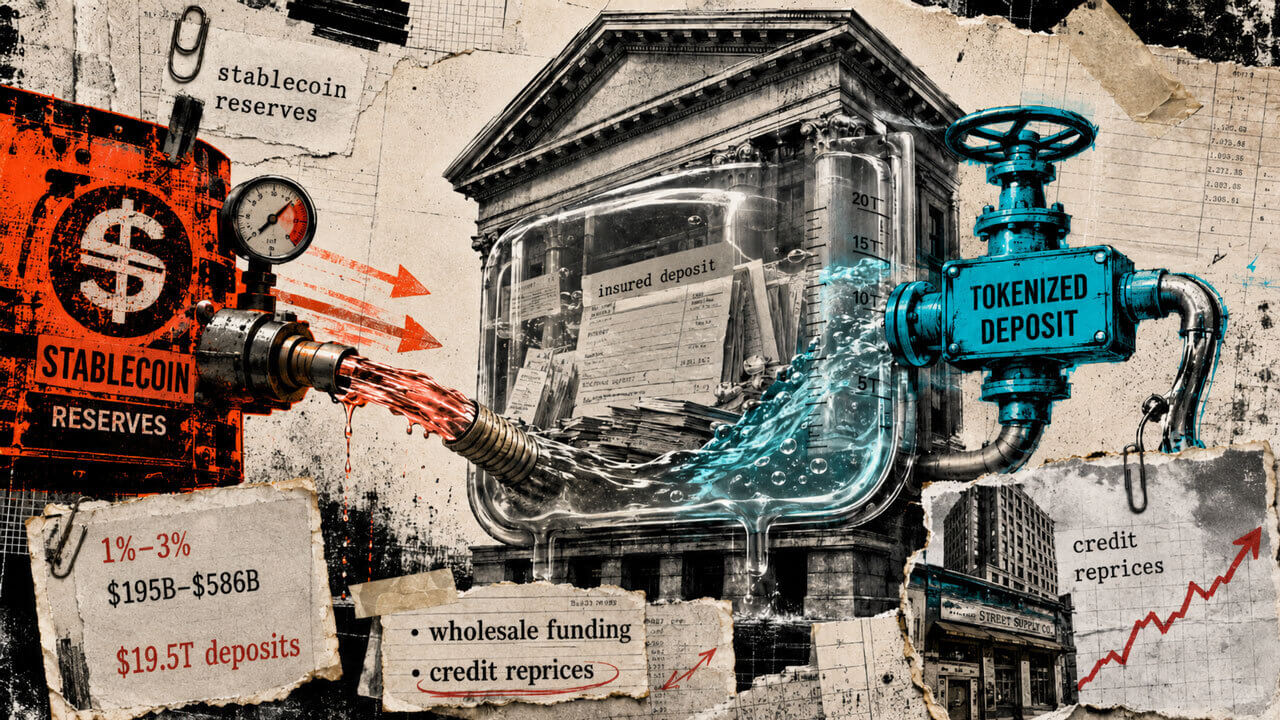
Banks are pivoting toward tokenized deposits as a strategic move to compete with stablecoins while protecting their core business models. While stablecoins and tokenized deposits both offer 24/7 settlement and programmable money features, the primary difference lies in the balance sheet. When customers move funds into traditional stablecoins, that liquidity often leaves the bank’s control; however, tokenized deposits allow the bank to keep those funds internally, ensuring they have the necessary capital to continue issuing loans and generating interest income.
According to Artem Tolkachev, Chief RWA Officer at Falcon Finance, the banking industry’s interest in this technology is driven more by financial structure than a simple desire for innovation. In the current landscape, a surge in stablecoin adoption acts as a withdrawal from the traditional banking system. By creating their own tokenized liabilities, banks can provide the same speed and efficiency found in decentralized finance (DeFi) but within a closed loop that maintains their status as the primary holders of capital.
In the United States, this development carries significant regulatory weight. Federal regulators have expressed concerns over the systemic risks posed by non-bank stablecoin issuers. Tokenized deposits, conversely, operate within the existing framework of federally insured depository institutions. This makes them a more palatable option for regulators who want to modernize the U.S. payment infrastructure without bypassing the safety nets of the traditional fractional reserve banking system.
For the broader crypto market, the rise of institutional tokenized deposits could signal a shift in how liquidity moves between traditional finance and digital asset exchanges. While these bank-issued tokens may lack the permissionless nature of assets like USDT or USDC, they could significantly increase the speed of institutional capital entering the ecosystem. Moving forward, investors should watch for the launch of unified ledger projects from major U.S. banks and potential legislative moves that clarify the legal status of bank-issued tokens versus private stablecoins.