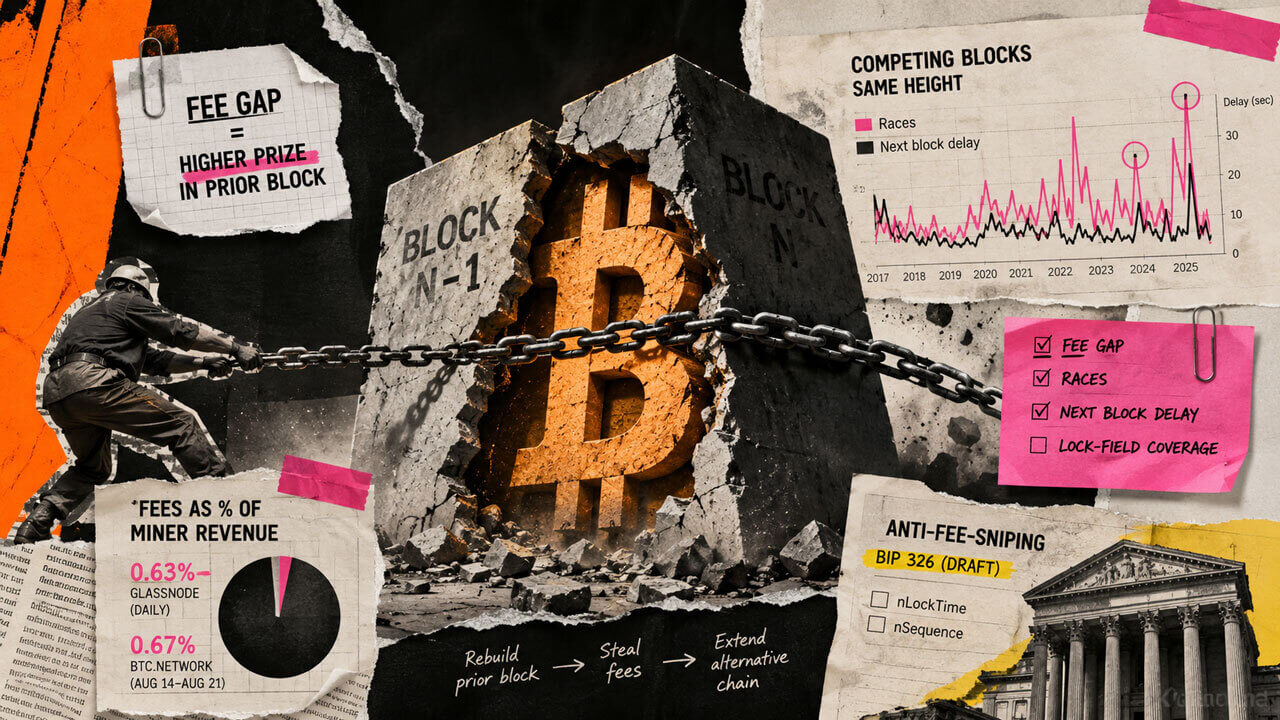
Transaction fee variance between adjacent Bitcoin blocks impacts network stability by creating an incentive for miners to compete for high-value blocks, which leads to 'block races' and significantly slower arrival times for subsequent blocks. When one block contains substantially higher fees than the next, miners may find it more profitable to attempt to re-mine the high-fee block rather than extending the chain with a low-fee block. This behavior, often referred to as fee sniping, can degrade the network's immediate settlement efficiency and introduce risks of chain reorganizations.
New research suggests that these fee gaps are not just theoretical concerns but are actively linked to measurable delays in next-block arrivals. As the Bitcoin block subsidy continues to decrease through halving events, the network’s security relies more heavily on transaction fees. If these fees remain highly volatile and inconsistent from block to block, the economic stability of the mining ecosystem could be challenged, potentially leading to more frequent forks as miners chase the most lucrative transaction sets.
For US-based institutional miners and stakeholders, this technical risk underscores the importance of a stable and predictable fee market. While high transaction fees are generally viewed as a sign of network health and demand, extreme variance can lead to unpredictable finality, which is a critical concern for businesses that rely on Bitcoin for large-scale settlements. The study suggests that the way Bitcoin handles fee distribution may need to be a focus for future protocol optimization to ensure long-term network integrity.
Investors and developers should watch for discussions around 'fee-smoothing' mechanisms or other protocol-level changes aimed at mitigating these structural incentives. Additionally, the continued adoption of Layer-2 solutions like the Lightning Network may help stabilize base-layer demand, potentially reducing the extreme fee spikes that trigger these security risks. Monitoring the frequency of orphaned blocks and the duration of block intervals during periods of high congestion will be key to assessing the real-world impact of fee variance.