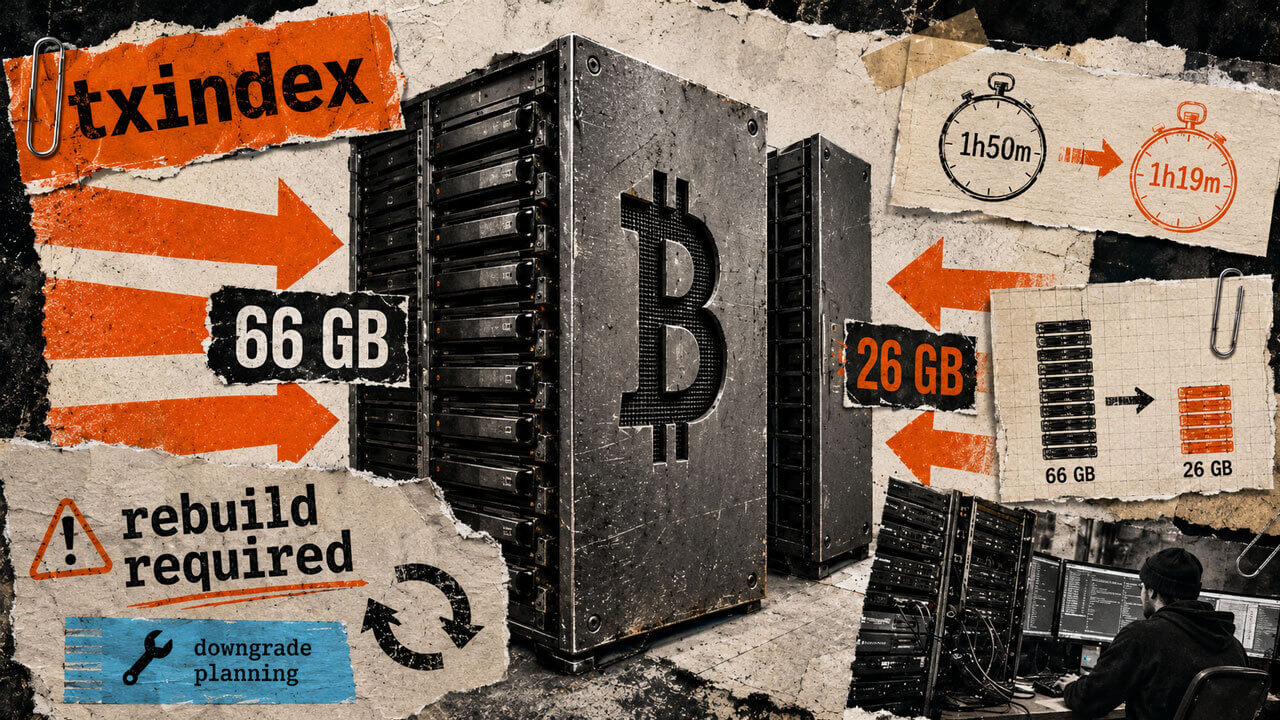
Bitcoin node operators can now save approximately 40 GB of storage space by rebuilding the optional transaction index (txindex) following a new code merge to the Bitcoin Core master branch. The update optimizes how transaction data is stored in the database, but the savings are not automatic; runners must manually trigger a rebuild of the index to capture the efficiency gains. This change is particularly relevant for those who maintain a full transaction history for block explorers or analytical tools, as the txindex is a secondary database that allows nodes to query any transaction ever recorded on the blockchain.
The technical improvement addresses one of the primary hurdles for Bitcoin decentralization: the ever-increasing size of the blockchain. As of late 2023 and early 2024, a full Bitcoin node with a complete transaction index can exceed 600 GB in size. By shaving off 40 GB, developers are easing the burden on node runners who use consumer-grade hardware, potentially slowing the rate at which operators need to upgrade their physical Solid State Drives (SSDs).
From a regulatory and geopolitical perspective, maintaining a high count of independent full nodes is critical for Bitcoin’s resilience against censorship and centralized control. In the United States, where the SEC has recently approved spot Bitcoin ETFs, the underlying health and decentralization of the network are increasingly viewed as foundational to the asset's legitimacy in traditional finance. Lowering the technical and financial costs of participating in the network helps ensure that the protocol remains robust against localized outages or regional policy shifts.
Node operators should proceed with caution regarding the implementation of this update. While the space savings are significant, the code merge currently requires a manual rebuild, which can take several hours or even days depending on the hardware's processing speed. Furthermore, users should be aware that if they choose to downgrade their Bitcoin Core version after performing this rebuild, they may be forced to rebuild the index once again to ensure compatibility with older software versions. Readers should monitor upcoming Bitcoin Core release notes to see when this optimization is bundled into a stable, user-friendly executable.