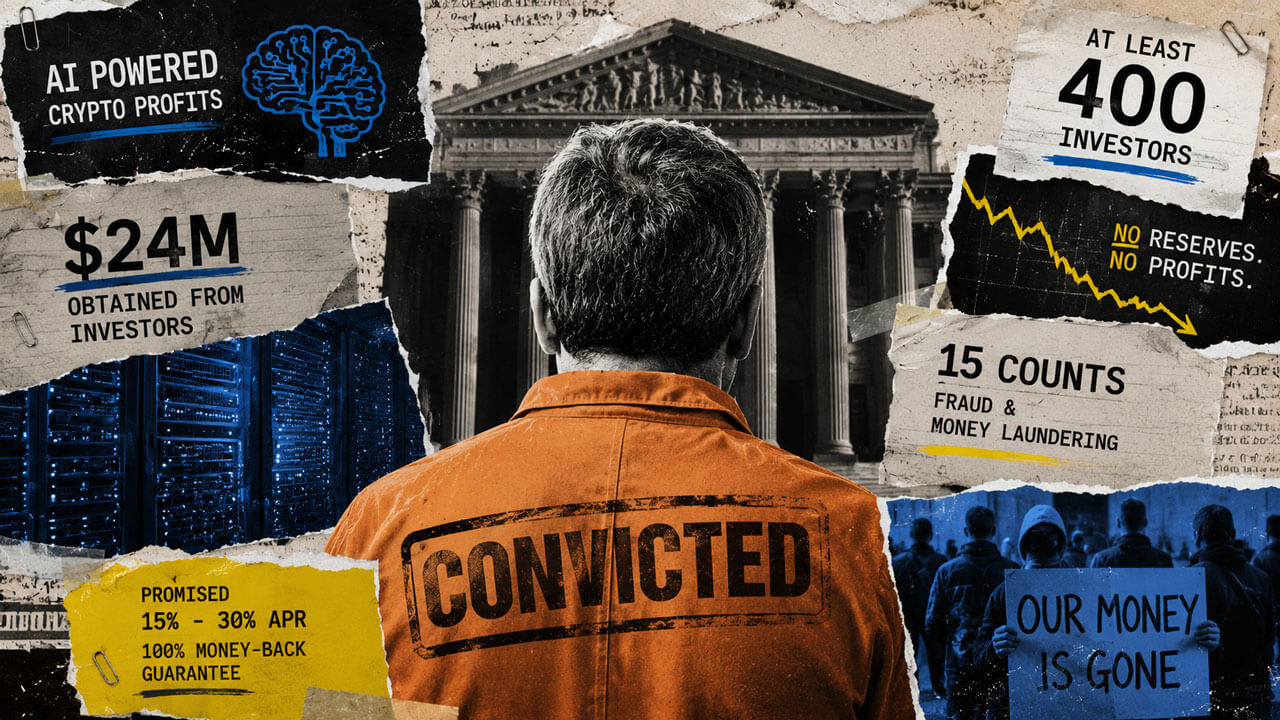
A federal jury has found Brent Kovar, the owner of Profit Connect Wealth Services, guilty on 15 counts including wire fraud and money laundering. The conviction stems from a $24 million scheme where Kovar and his associates lured at least 400 investors by falsely claiming that a sophisticated artificial intelligence bot could guarantee high returns through cryptocurrency and stock trading. Prosecutors successfully argued that these guarantees were entirely fabricated and that the company lacked the financial reserves it claimed to possess.
During the trial, evidence revealed that instead of utilizing AI to generate profits, the funds were often misappropriated for personal use or to sustain the appearance of a legitimate enterprise. This case is a prime example of the 'AI-washing' trend, where bad actors leverage the hype surrounding artificial intelligence to add a veneer of legitimacy to traditional Ponzi-style schemes. The Las Vegas-based operation specifically targeted individuals looking for safe entry points into the volatile crypto market, only to leave them with significant financial losses.
The conviction of Kovar reflects the U.S. Department of Justice’s intensified focus on digital asset fraud. By securing a multi-count conviction, federal authorities are sending a clear message that the use of complex technology or buzzwords will not shield individuals from traditional securities and wire fraud statutes. This regulatory environment is becoming increasingly hostile toward platforms that offer 'guaranteed' returns without transparent, audited financial backing.
For the broader crypto market, this news highlights the persistent reputational risks posed by fraudulent actors. While the removal of such schemes is a long-term positive for market integrity, the immediate impact often involves increased skepticism from retail investors and potential calls for stricter oversight of 'AI-powered' financial products. Legitimate DeFi and AI-crypto projects may face a more rigorous due diligence process from both users and regulators in the wake of such high-profile convictions.
Looking ahead, market participants should watch for Kovar’s upcoming sentencing, which could result in significant prison time and restitution orders for the 400 victims. Furthermore, investors should anticipate new guidelines from the SEC and DOJ regarding the marketing of automated investment tools, as the government seeks to prevent similar $24 million losses in the future.