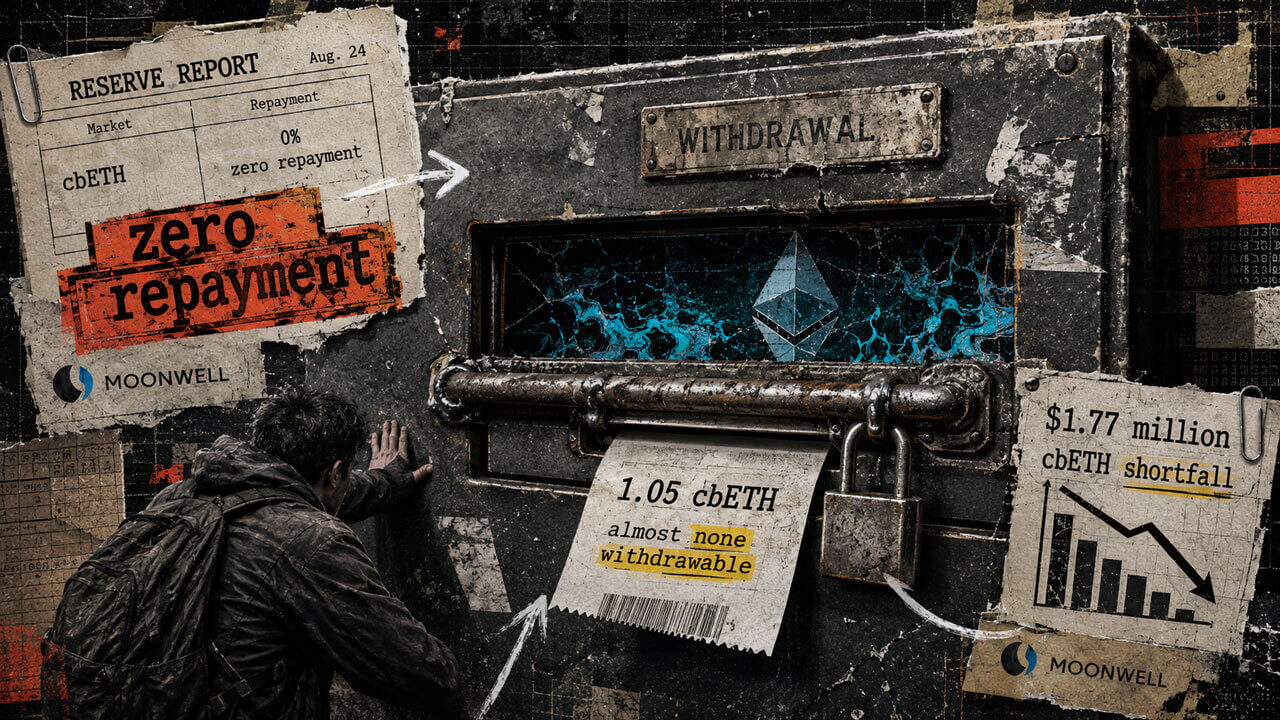
Moonwell, a decentralized lending protocol, is currently facing a critical $1.8 million liquidity hole that has resulted in a utilization rate of 100.43%. This state of negative liquidity means that the protocol has more outstanding loans than available assets, making it impossible for suppliers to withdraw their deposits. Users attempting to exit their positions are currently blocked because there is no liquid capital remaining in the affected pools to facilitate these transactions.
The shortfall appears to be linked to non-liquidated positions or bad debt that has accumulated within the system. Despite the severity of the situation, Moonwell’s latest governance and recovery plan has drawn sharp criticism for failing to prioritize the deficit. The current proposal allocates zero dollars toward remediating the $1.8 million hole, focusing instead on other protocol adjustments. This leave suppliers who were not liquidated during market volatility in a state of uncertainty, as there is currently no published roadmap for how the protocol intends to restore solvency.
For U.S. DeFi participants, this situation underscores the systemic risks associated with algorithmic lending markets, where "bank runs" manifest as 100% utilization rates. This event could attract further scrutiny from U.S. regulatory bodies like the CFTC or SEC, which have grown increasingly concerned about the lack of consumer protections and transparency in decentralized finance. The inability of a protocol to honor withdrawals is a primary trigger for regulatory intervention regarding investor harm.
Moving forward, market participants should monitor Moonwell’s governance forums for any emergency amendments that might redirect protocol reserves or insurance funds toward the $1.8 million deficit. The key metrics to watch are the utilization percentages; until these drop significantly below 100%, the liquidity crunch will persist. The protocol's native token and overall total value locked (TVL) are likely to remain under pressure until a credible solvent solution is presented to the community.