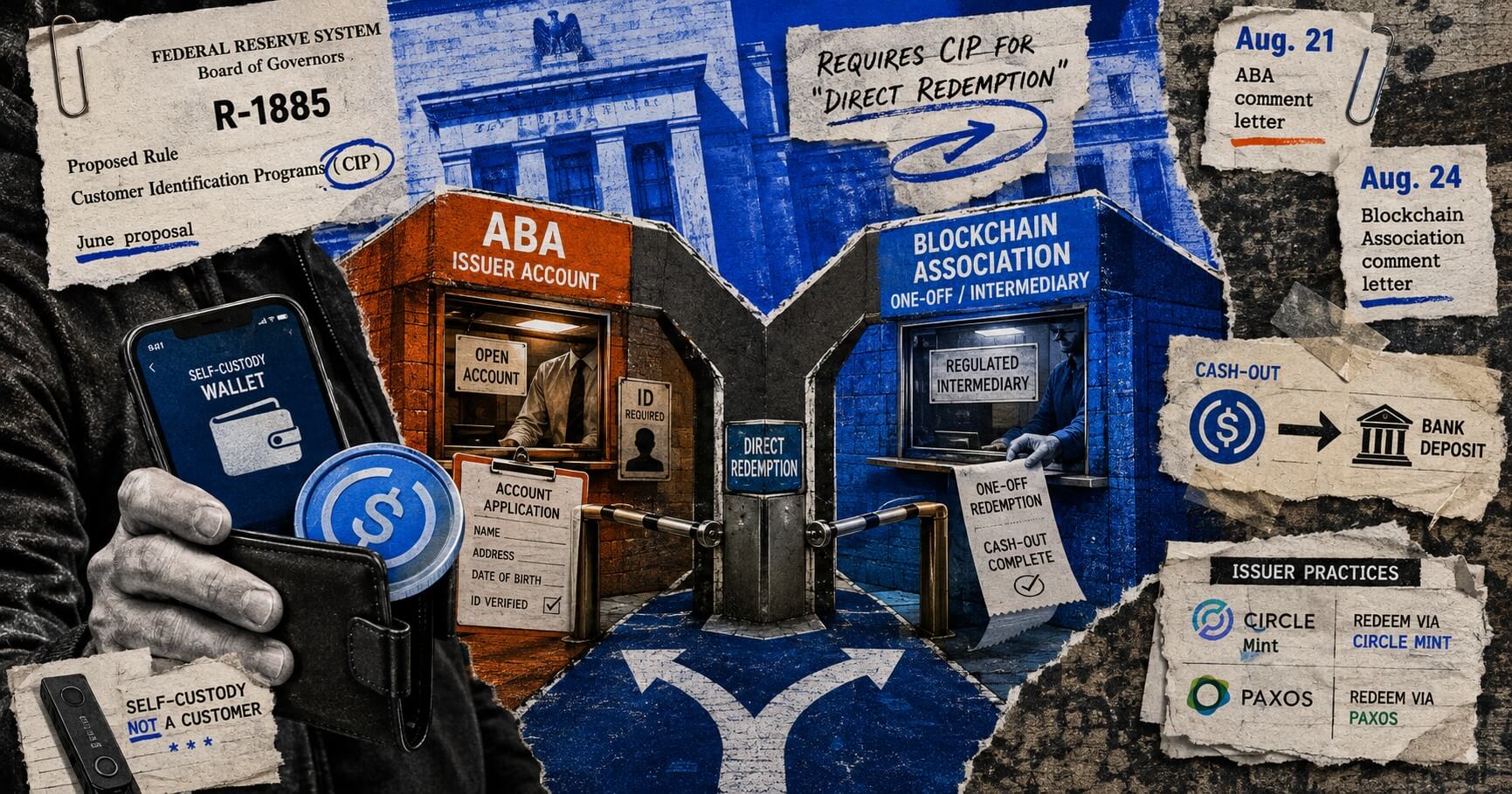
The US banking lobby is advocating for a regulatory framework where stablecoin holders must establish formal 'customer' accounts with issuers before they can cash out their digital assets. This push aims to align stablecoin redemptions with traditional anti-money laundering (AML) and know-your-customer (KYC) banking standards. If implemented, self-custody holders who currently enjoy the ability to move assets freely between private wallets would face significant friction, as they would be required to undergo a full onboarding process with the issuer to access liquidity in US dollars.
In response to these demands, the Blockchain Association has filed comments urging regulators to exclude one-off transactions and intermediary-routed cash-outs from being classified as 'customer' relationships. The association argues that treating every token holder as a customer of the issuer is impractical and undermines the utility of decentralized finance. They are specifically calling for regulators to provide a clear threshold that determines at what point a self-custody holder actually becomes a formal customer, advocating for the protection of casual users who may only interact with an issuer sporadically.
This conflict highlights a deepening divide in Washington over the future of stablecoin legislation. Traditional financial institutions view stablecoins as a threat to the banking sector's monopoly on retail deposits and are leveraging regulatory concerns to impose banking-style burdens on crypto firms. Conversely, the crypto industry warns that such heavy-handed requirements could stifle innovation and push users toward offshore, unregulated platforms that do not comply with US standards.
For investors and market participants, the outcome of this debate will dictate the future liquidity of major stablecoins like USDC and USDT within the US market. If the bank lobby succeeds, the transition from on-chain assets to fiat currency will become more centralized and heavily monitored. Readers should closely monitor upcoming congressional sessions on stablecoin market structure, as the definition of a 'customer' in these bills will be the pivot point for how self-custody users interact with the traditional financial system.