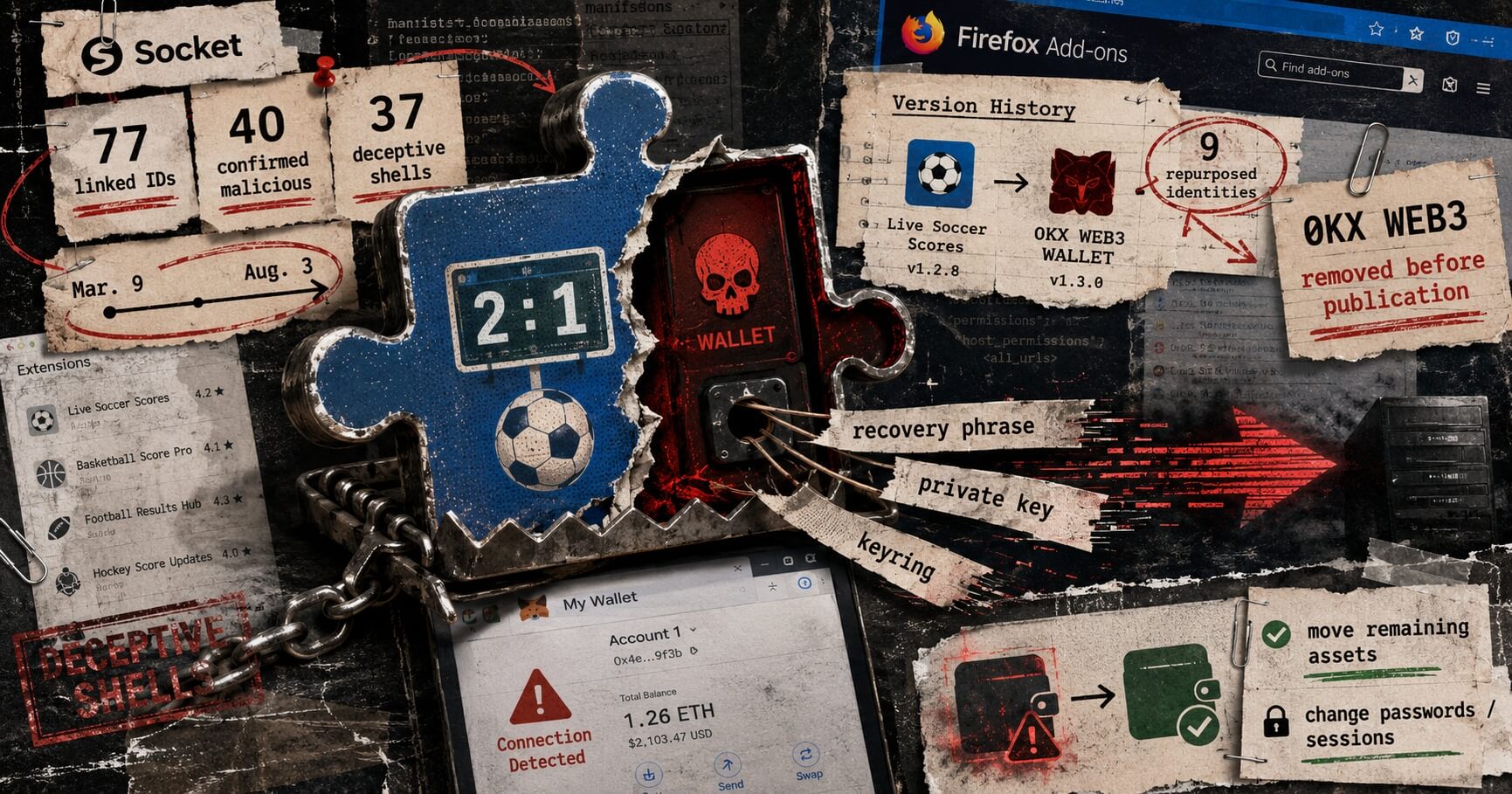
The 40 malicious Firefox add-ons identified by cybersecurity platform Socket steal cryptocurrency by intercepting sensitive data, such as private keys and seed phrases, directly from browser-based wallets. Nine of these extensions originally appeared as legitimate sports-score tools to gain user trust before deploying their malicious payload. Crucially, simply removing the extension from the browser does not secure the funds; once the 'secrets' are exposed, the wallet is permanently compromised, necessitating a full migration of assets to a new, clean wallet address with a fresh recovery phrase.
According to the investigation by Socket, the attackers utilized a 'bait-and-switch' tactic where seemingly benign extensions were updated with malicious code designed to target popular crypto wallet interactions. By posing as utility or entertainment tools, these extensions bypassed initial security screenings and only began their exfiltration activities once a significant user base was established. The malware specifically targeted the moment users interacted with their wallet interfaces to capture credentials.
For U.S. crypto investors, this breach highlights the persistent risks associated with browser-based 'hot' wallets and the vulnerabilities of the extension ecosystem. While Mozilla regularly audits its store, the ability for developers to push malicious updates creates a moving target for security teams. This incident serves as a reminder of the FBI’s frequent warnings regarding the security of self-custody and the importance of vetting every piece of software that interacts with digital assets.
From a market perspective, these security breaches contribute to a bearish sentiment regarding the safety of decentralized finance (DeFi) for retail users. While no specific coin was the sole target, the broad nature of these attacks affects holders across all major ecosystems, including Bitcoin and Ethereum. This may drive further adoption of hardware wallets (cold storage) as users lose confidence in the security of standard browser environments.
Moving forward, crypto holders should watch for official lists of the affected extension IDs and check their browser history for any sports-related tools that may have been automatically updated. Security analysts expect more 'Trojan horse' style attacks in the browser space, making multi-signature wallets and hardware-based confirmation more critical than ever for active traders.