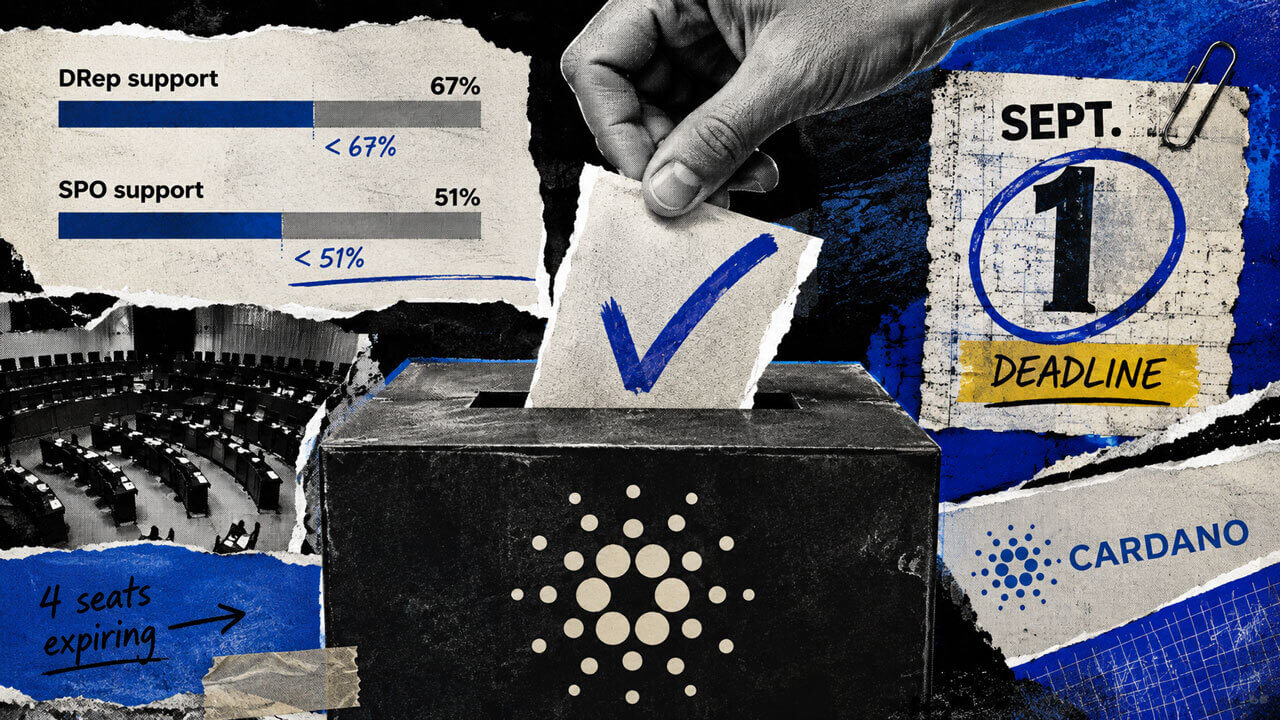
Cardano is in a race against time to secure enough votes from Stake Pool Operators (SPOs) and Delegate Representatives (DReps) to successfully trigger the governance phase of the Chang hard fork. To move forward, the protocol requires a specific threshold of the total ADA supply to be represented by active DReps and a majority of SPOs to adopt the latest node version. Currently, DRep support is 25.3 points short and SPO support is 39.0 points short of the targets needed before the September 1 expiry, creating a potential hurdle for the network’s move to the Voltaire era.
The "3-seat bottleneck" mentioned by analysts refers to the new tri-cameral governance structure consisting of the Constitutional Committee, DReps, and SPOs. For the hard fork to effectively transition Cardano into a community-led ecosystem where users control the treasury and protocol parameters, all three "seats" must be sufficiently populated and active. The current shortfall suggests that while the technology is ready, the community mobilization required for on-chain governance is still catching up to the ambitious timeline.
For US-based Cardano holders and institutional investors, this transition is a critical litmus test for decentralization. In the eyes of US regulators like the SEC, the degree of a project's decentralization is a primary factor in determining whether a digital asset is classified as a security. A successful transition to community governance could provide Cardano with a stronger legal argument for being a decentralized public utility, potentially reducing long-term regulatory pressure in the American market.
If the community fails to close these voting gaps by the September 1 deadline, the transition may face a delay or a staged rollout, which could lead to short-term price volatility for ADA. Stakeholders should closely monitor the Intersect MBO governance dashboard and official updates from Input Output Global (IOG). The immediate focus remains on whether enough ADA holders will register as DReps or delegate their voting power in time to meet the minimum requirements for the hard fork's next phase.