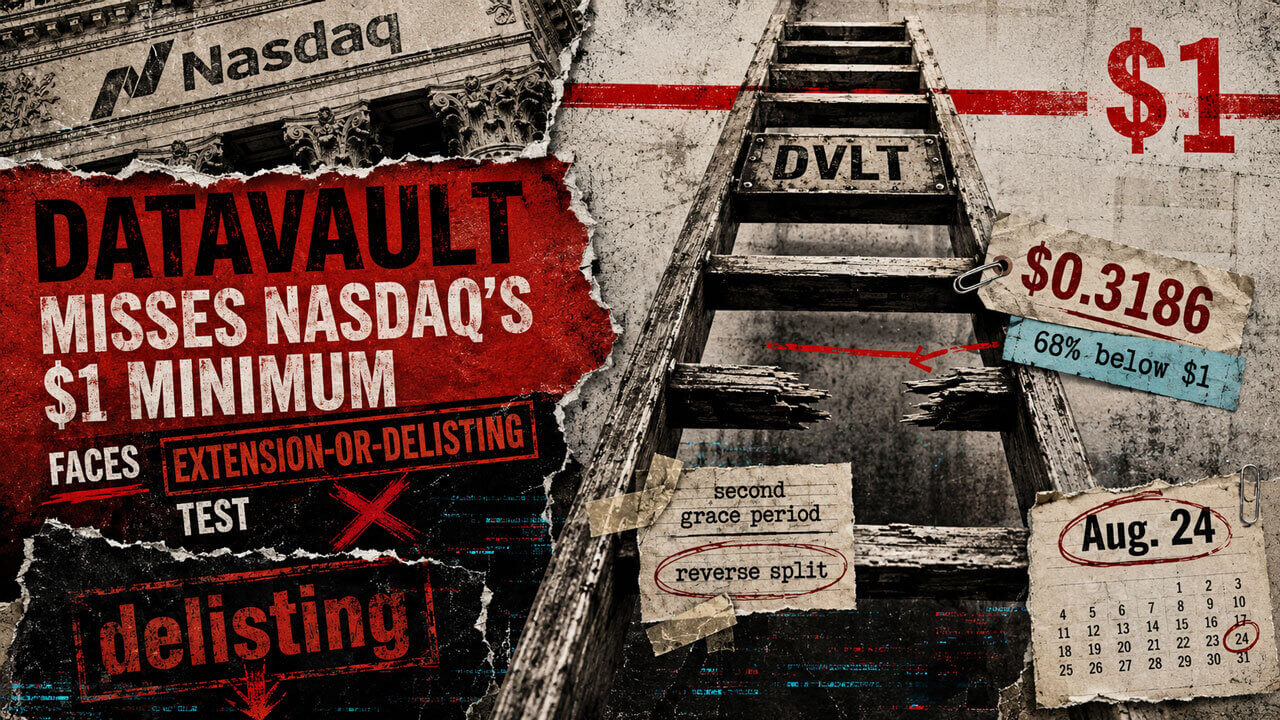
Datavault (DVLT) is currently at risk of being delisted from the Nasdaq as its first 180-day cure period for the minimum bid price rule expires on August 24. With the stock currently trading roughly 68% below the mandatory $1 threshold, the company must either regain compliance immediately or secure a second 180-day extension. To qualify for additional time, Datavault must meet all other initial listing standards and provide written notice of its intent to cure the deficiency, a process that typically involves executing a reverse stock split.
This situation highlights the ongoing struggle for small-cap blockchain and tech firms to maintain public listings during volatile market cycles. Nasdaq’s Listing Rule 5550(a)(2) requires listed securities to maintain a minimum bid price of $1 to ensure market quality and investor protection. Because DVLT has failed to meet this requirement for an extended period, the exchange issued a deficiency notice. If the company fails the August 24 deadline without receiving an extension, Nasdaq staff will issue a delisting notice, which the company can then appeal to a hearings panel to delay the process.
For investors, a delisting could significantly reduce liquidity and force the stock to move to the over-the-counter (OTC) markets, which often leads to further price depreciation and reduced visibility. The regulatory pressure from Nasdaq is designed to filter out "penny stock" volatility from the main exchange. Datavault's management now faces a critical decision: whether to undergo a dilutive reverse split to maintain its Nasdaq status or risk the loss of access to the capital and prestige associated with a major US exchange.
Market participants should watch for an official announcement from Datavault regarding a potential reverse stock split or an update on the Nasdaq extension status. If the company fails to provide a viable compliance plan by the end of the cure period, the transition to OTC trading could occur shortly thereafter. The outcome will serve as a significant indicator for other distressed crypto-adjacent firms currently struggling to maintain their positions on major US exchanges.