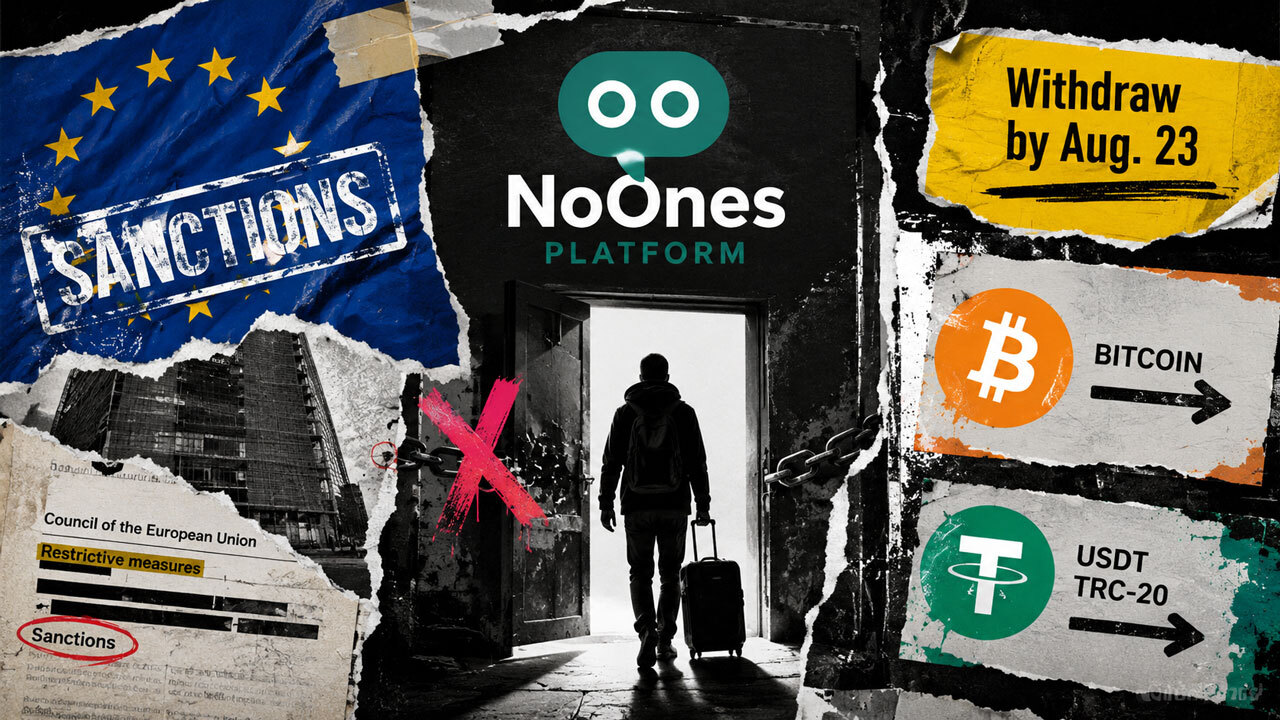
EU sanctions against specific jurisdictions and non-compliant entities have triggered a mandatory shutdown of trading and deposit services on at least one crypto platform, forcing a shift to withdrawal-only mode. Effective after August 23, this transition is designed to allow users to reclaim their assets while the platform attempts to comply with stringent European regulatory mandates. Currently, the platform is only facilitating exits via the Bitcoin mainnet and Tether (USDT) on the TRC-20 network, highlighting a narrowed path for fund recovery.
The urgency of this warning stems from recent escalations in European Union regulatory oversight aimed at preventing sanctions evasion and tightening financial controls. Users are being strongly advised to pull their funds immediately, as the window for safe withdrawal may close if further legal actions are taken. A major point of concern for analysts is that the current operator of the platform remains unidentified, creating a high-risk environment where users have little recourse if the withdrawal gates are suddenly shut.
From a regulatory perspective, this move reflects the EU's aggressive stance on Anti-Money Laundering (AML) and the enforcement of geopolitical sanctions within the digital asset space. As the region moves closer to full implementation of the Markets in Crypto-Assets (MiCA) regulation, platforms operating with anonymous leadership or in "gray zones" are being systematically squeezed out of the European market. This forced compliance ensures that only fully transparent and regulated entities can offer services to EU residents.
For the broader crypto market, this exit creates localized selling pressure and a spike in transaction volume on the Tron and Bitcoin networks as users migrate to safer exchanges or cold storage. US-based investors should view this as a cautionary tale regarding the importance of exchange transparency and the far-reaching impact of international sanctions. Moving forward, market participants should watch for the official identification of the operator and monitor whether other offshore exchanges serving the European market face similar regulatory ultimatums.