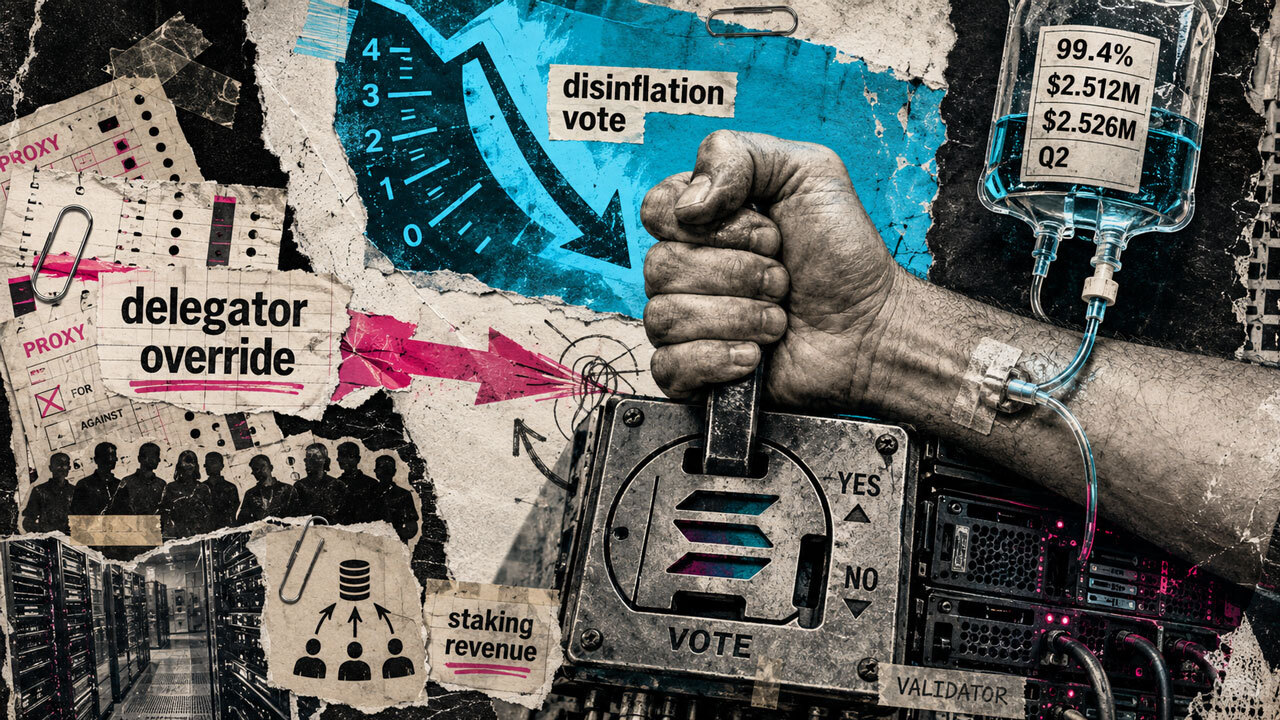
The proposed acceleration of Solana’s disinflation schedule will lead to a reduction in the staking rewards distributed to participants, as the network moves to lower its token issuance rate faster than originally planned. For native stakers, this means a lower annual percentage yield (APY) in exchange for increased long-term scarcity of the SOL token. While the move is designed to improve the network's economic sustainability, it creates a direct conflict between those seeking higher yields and those advocating for a more deflationary asset profile.
A major treasury firm within the ecosystem has voiced strong opposition to the faster disinflation rate, citing that 99.4% of its revenue is derived from these inflationary rewards. This highlight's a critical tension in the Solana ecosystem: many of the entities providing security and infrastructure are heavily dependent on protocol-level subsidies. If yields are cut too aggressively, there are concerns that smaller validators may struggle to remain profitable, potentially leading to increased centralization if only the largest players can afford to operate.
Despite the pushback from large revenue-reliant firms, the Solana network maintains a decentralized governance structure where native stakers retain the power to override a validator’s default stance. This mechanism ensures that the community of token holders—rather than just the infrastructure providers—has the final say in the network's monetary policy. This balance of power is vital for US-based investors who prioritize decentralized decision-making and transparent tokenomics when evaluating blockchain assets.
From a market perspective, reducing inflation is often viewed as a long-term bullish signal for price action, as it limits the supply of new tokens hitting the market. However, the immediate drop in yield could lead to transient sell pressure or a migration of capital to other high-yield Layer 1 networks. Investors should closely monitor the upcoming governance votes and the reaction of major US-focused validators to see if a compromise is reached between revenue protection and token scarcity.
In the coming months, the community will be watching for any adjustments to the disinflation curve and how it affects the total value locked (TVL) in Solana staking. If the proposal passes, it will mark a significant shift in Solana's economic maturity, moving away from high-incentive bootstrap phases toward a more stable, fee-driven revenue model for validators.