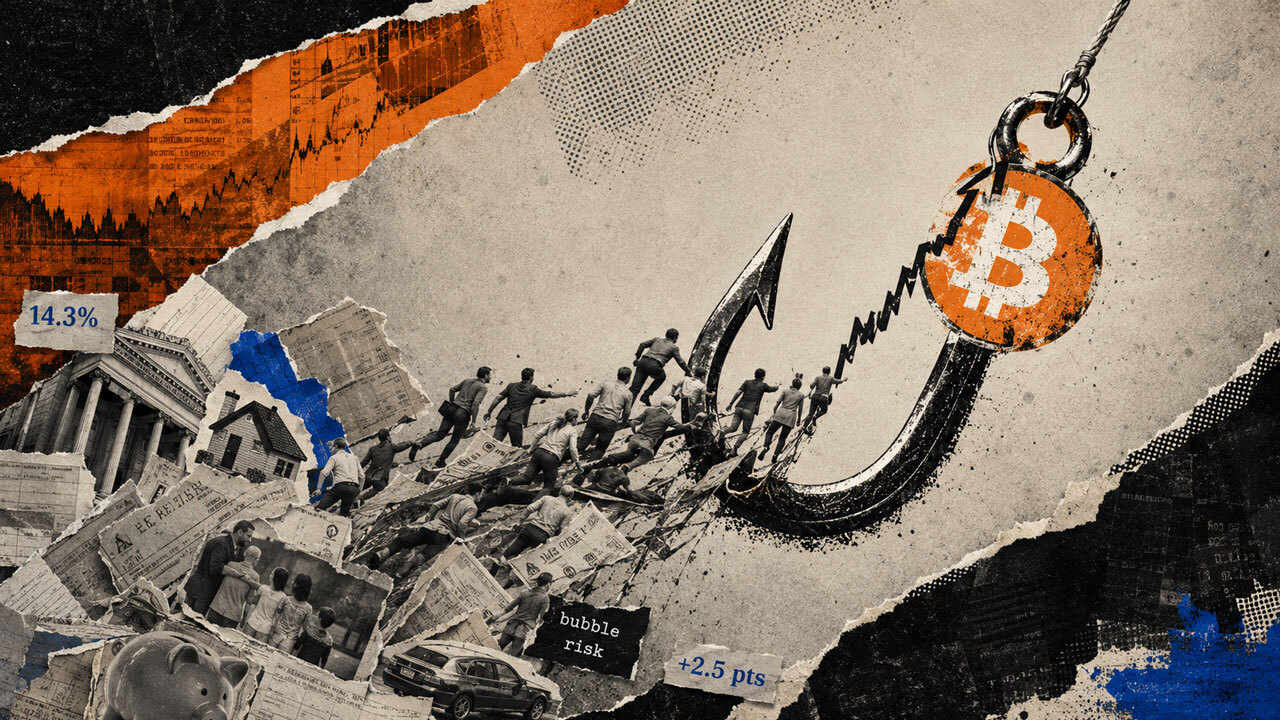
According to a recent experiment conducted by the Federal Reserve Bank of Cleveland, past Bitcoin price performance acts as a primary catalyst for attracting new investors into the cryptocurrency market. The study revealed that when potential buyers are shown Bitcoin’s growth over the previous year, their expectations for future returns rise, directly correlating with an increased likelihood of purchasing the asset. Specifically, participants exposed to positive historical performance were 2.5 percentage points more likely to own crypto in follow-up surveys compared to those who were not.
The Cleveland Fed's research underscores the psychological mechanism behind crypto adoption, often referred to as "return chasing" or "recency bias." By analyzing participant reactions to historical price charts, researchers demonstrated that momentum isn't just a market indicator for professional traders; it is a fundamental entry trigger for the general public. This suggests that Bitcoin's bull cycles are self-reinforcing, as price appreciation serves as its own most effective marketing tool for retail onboarding.
For US-focused investors and intelligence platforms, this finding confirms that retail sentiment remains highly sensitive to price action rather than just technological utility or regulatory clarity. However, the study also signals to regulators like the SEC and the Fed that periods of high volatility can rapidly shift consumer exposure. While these inflows support price floors during bull runs, they also increase the risk of retail losses during sudden market corrections if investors are entering solely based on past performance.
Moving forward, market participants should watch how mainstream media coverage of Bitcoin's year-to-date performance impacts overall wallet growth. As Bitcoin continues to integrate into traditional financial systems through spot ETFs, the "Cleveland Fed effect" may become even more pronounced. Investors should monitor whether a sustained breakout above previous all-time highs triggers a new wave of retail FOMO (fear of missing out) that matches or exceeds the growth rate identified in the Fed's study.