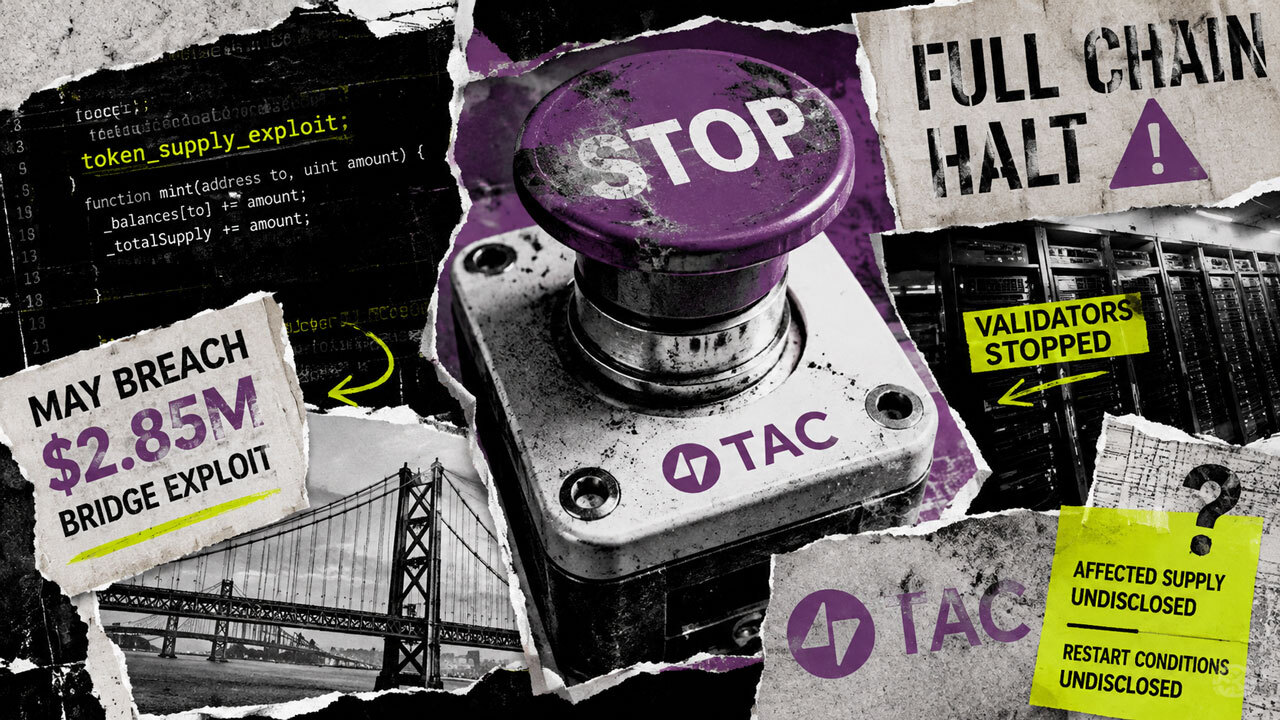
The TAC EVM network has officially halted block production to contain a significant supply exploit, marking a major setback for the project's interoperability goals. Validators across the network coordinated the shutdown after detecting an unauthorized expansion of asset supply, a move intended to prevent further drainage of liquidity. While the halt successfully stopped the immediate exploit, the connection between TAC and The Open Network (TON) remains inactive, leaving users unable to move assets across the bridge during the investigation.
This incident represents a broader security challenge for the network, following a previous containment effort regarding its bridge in May. Unlike the earlier incident, the current exploit appears to involve a direct manipulation of the network's supply mechanics. As of now, the developers have not disclosed the specific amount of assets affected by the breach, nor have they provided a definitive timetable for when block production will resume or when the TON connection will be restored.
From a market perspective, this exploit highlights the persistent vulnerabilities inherent in cross-chain infrastructure and EVM-compatible layers designed to bridge different blockchain ecosystems. For users of TON, the 'dark' status of the TAC connection limits the utility of assets that were intended to flow seamlessly into Ethereum-compatible decentralized finance (DeFi) protocols. The lack of transparency regarding the total loss is likely to keep sentiment cautious in the short term.
For US-based crypto investors and DeFi participants, this event serves as a reminder of the 'bridge risk' often cited by regulators like the SEC and CFTC. Security audits and validator coordination are under the microscope as these networks struggle to maintain uptime while defending against sophisticated smart contract exploits. The ability of TAC to recover and implement more robust supply controls will be a key indicator of its long-term viability.
Moving forward, stakeholders should monitor official TAC and TON communication channels for a 'Post-Mortem' report detailing the exploit's root cause. The primary indicators to watch are the restart of the validator set and the restoration of the bridge UI, which will signal that the immediate threat has been neutralized. Until then, any assets remaining on the network are effectively illiquid.