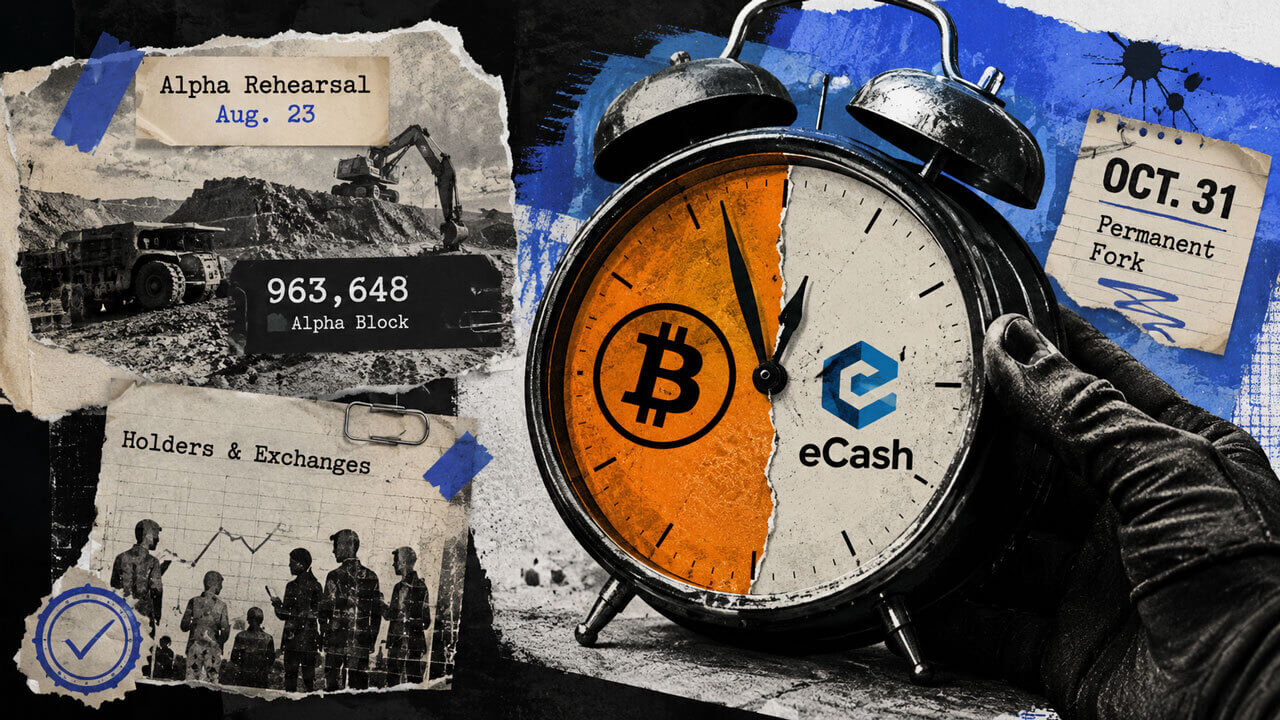
Bitcoin holders face potential security vulnerabilities due to unresolved fork risks associated with the new eCash (XEC) test chain, pECX, which began testing practice blocks on August 23. The primary concern for holders is the lack of finalized software and clear replay protection rules ahead of a critical October deadline. Without these technical safeguards, transactions made on the main chain could inadvertently be mirrored on the new chain, leading to the potential loss of assets or unauthorized transfers if exchanges and wallet providers do not update their infrastructure in time.
The recent activity on the pECX test chain was intended to stress-test the network's architecture, but the developer team has yet to release the final software version or establish definitive exchange handling procedures. This technical gap creates a period of uncertainty for the broader Bitcoin ecosystem, particularly for those holding assets on platforms that grew out of previous Bitcoin forks. The October deadline serves as a hard cutoff for the implementation of these upgrades, leaving a narrow window for developers to resolve existing bugs and for service providers to integrate the new protocols.
For US-based crypto investors and exchange users, the implications are largely operational. Major trading platforms typically require a stable, final software release to implement security measures that prevent replay attacks. If the eCash developers fail to provide these tools promptly, exchanges may be forced to suspend trading or freeze withdrawals and deposits for affected assets to protect user funds. This lack of clarity can lead to increased market volatility and reduced liquidity for XEC as the deadline approaches.
Moving forward, market participants should closely monitor the release of the official eCash software client and look for confirmation of 'replay protection' in the code. Investors should also watch for official announcements from major exchanges regarding their support for the October transition. Ensuring that your assets are held in wallets or on exchanges that have explicitly stated their readiness for the fork is the most effective way to mitigate these unresolved technical risks.