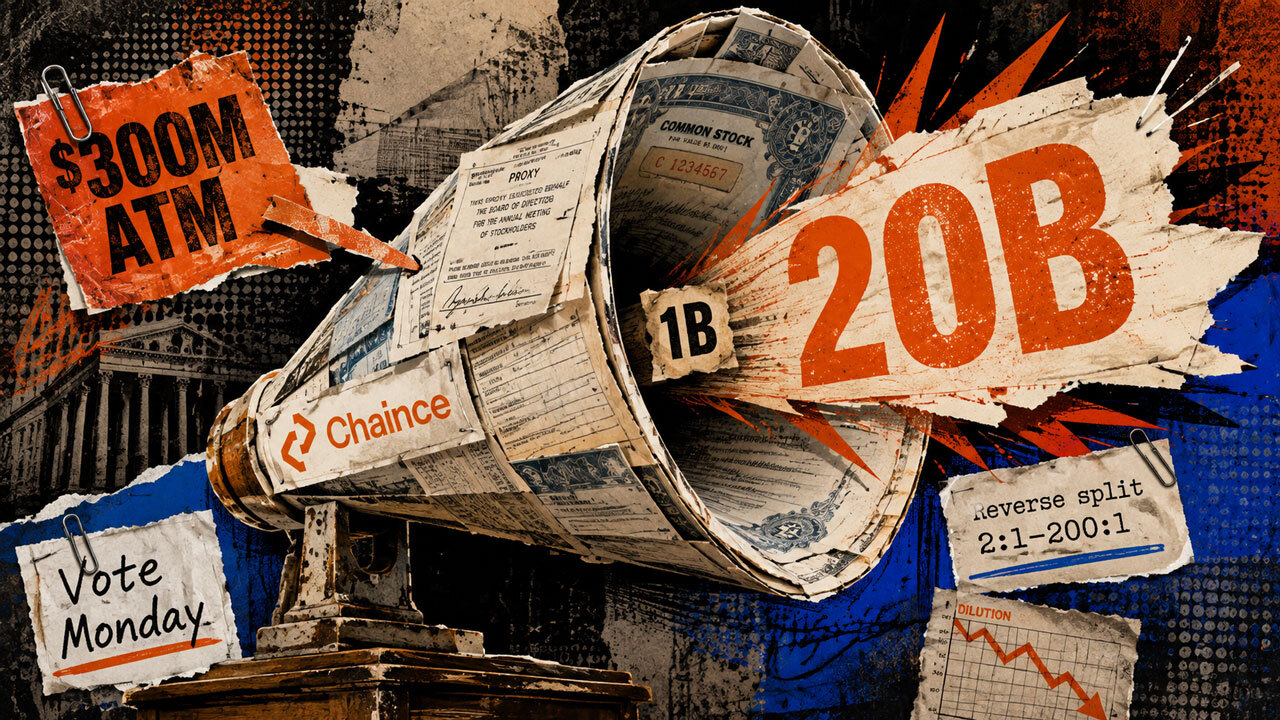
Metaplanet, often referred to as Japan's answer to MicroStrategy, is proposing a significant update to its corporate structure by seeking a 20 billion-share ceiling and a three-year window for reverse stock splits. The primary reason for these proposals is to provide the firm with 'headroom' to issue new equity following its recently launched $300 million stock offering. By increasing the share ceiling, Metaplanet ensures it can continue to raise capital to fund its Bitcoin treasury without hitting regulatory limits, while the reverse split authority serves as a tool to manage share price volatility and maintain listing standards if dilution occurs.
This strategy mirrors the high-leverage Bitcoin accumulation model popularized in the United States. By utilizing equity markets to purchase BTC, Metaplanet is positioning itself as a primary vehicle for institutional Bitcoin exposure in Asia. The proposal for a three-year reverse-split mandate is particularly notable, as it suggests the company is preparing for a multi-year cycle of capital raises and potential share price adjustments as they aggressively expand their balance sheet.
For the broader crypto market, this news highlights the growing global trend of 'Bitcoin Treasury' firms acting as persistent buy-side engines. As Metaplanet secures the legal infrastructure to issue more shares, it essentially creates a pipeline for hundreds of millions of dollars to flow directly into Bitcoin. This institutionalization of BTC as a corporate reserve asset helps solidify the cryptocurrency's price floor and reduces available exchange supply over the long term.
Investors and analysts should now watch for the official shareholder approval of these measures and the timing of the $300 million offering’s deployment. The key metric will be the firm's 'Bitcoin yield'—how effectively they can increase BTC holdings per share despite the dilutive nature of the new offerings. Furthermore, any regulatory pushback in international markets regarding this 'infinite' share issuance model could set a precedent for other crypto-treasury firms globally.