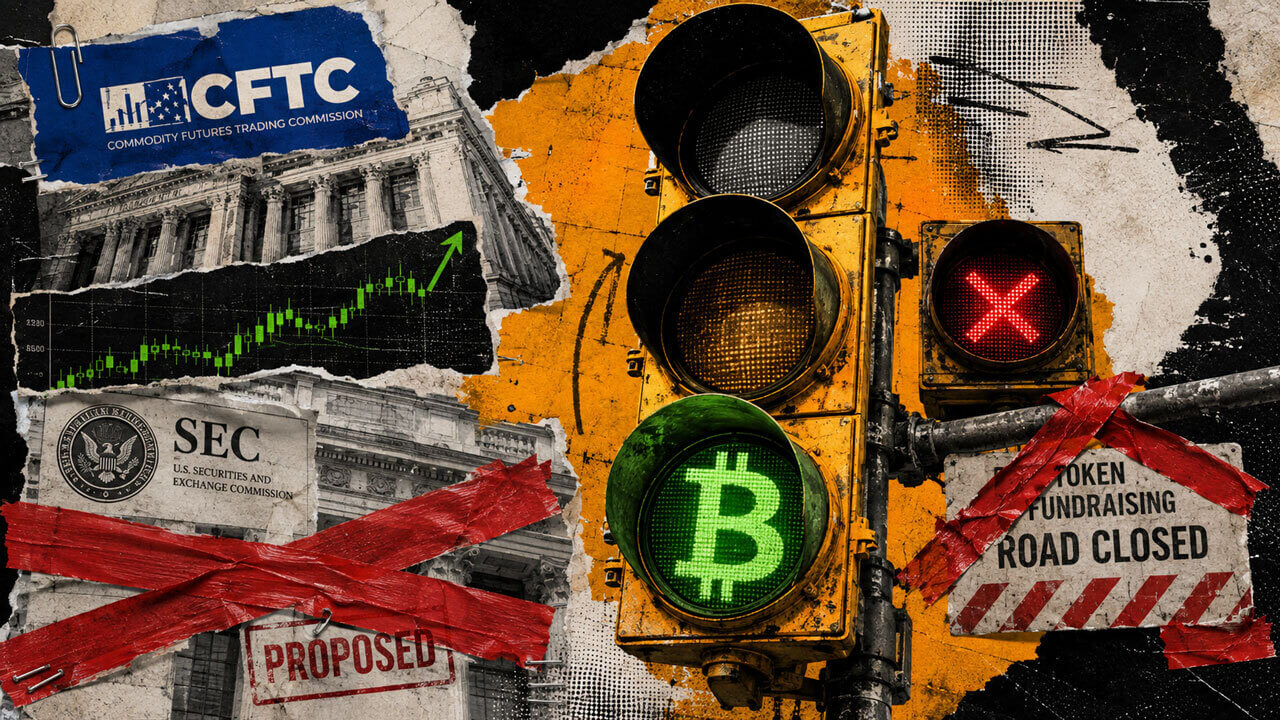
The U.S. regulatory environment has taken an unusual turn, with the Commodity Futures Trading Commission (CFTC) approving Bitcoin perpetual contracts for regulated exchanges on May 29, while the Securities and Exchange Commission (SEC) only recently proposed a legal pathway for token-based fundraising on August 18. This means that while American investors can now access high-leverage trading tools, crypto founders still face significant legal hurdles when attempting to raise capital from the public under current securities laws.
This regulatory sequence is considered unusual because it facilitates high-risk speculation before establishing the infrastructure for sustainable project growth. The CFTC’s move to allow perpetuals—a derivative product that lacks an expiry date and is often used for high leverage—caters to the demand for institutional trading liquidity. Meanwhile, the SEC’s August proposal aims to provide a framework for token networks to raise money, but these rules are still in the early stages and have not yet been fully implemented to support new project launches.
For crypto founders, this imbalance creates a difficult operational environment. While the market for trading existing assets like Bitcoin is becoming more sophisticated and regulated, the process of launching new decentralized projects remains legally precarious. Founders must wait for the SEC to finalize rules written specifically for token networks, a process that has historically been slow and fraught with enforcement actions, leaving a gap between trading accessibility and building capacity.
Investors and industry stakeholders should watch for further developments regarding the SEC's proposed legal route for token networks. As the U.S. government attempts to rebuild the crypto regulatory framework, the tension between the CFTC’s commodity-focused approach and the SEC’s investor protection mandate will likely dictate whether the U.S. remains a viable hub for crypto innovation or becomes primarily a venue for institutional speculation.