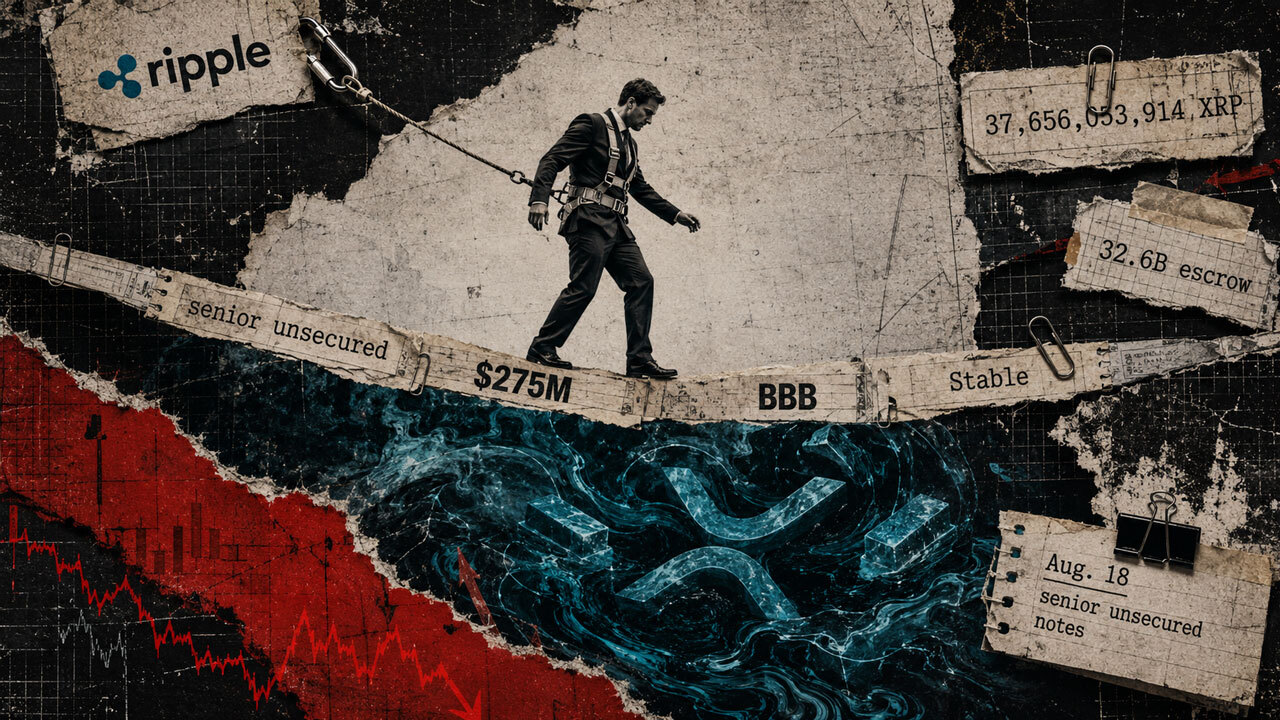
Ripple secures its $275 million institutional credit line by leveraging its vast reserves of XRP held in escrow as the primary backing for the facility. Through its subsidiary, Ripple Prime, the company received a BBB investment-grade rating from Kroll Bond Rating Agency (KBRA). This rating is predicated on the expectation of support from the parent company and the substantial value of Ripple’s locked XRP reserves, which serve as a critical cushion for institutional lenders and provide the firm with high-level access to traditional capital markets.
The KBRA rating represents a significant milestone for Ripple, bridging the gap between digital asset management and traditional corporate finance. By using escrowed XRP as the foundation for this credit line, Ripple can manage operational liquidity and expand its institutional offerings without needing to sell XRP directly into the open market. This treasury management approach effectively converts stagnant digital assets into functional borrowing power, demonstrating how large-scale crypto firms can navigate institutional finance.
From a regulatory and geopolitical perspective, this move signals a growing maturity in the crypto sector despite ongoing U.S. SEC scrutiny. The fact that a traditional credit agency like KBRA has issued an investment-grade rating suggests that the underlying business model and the valuation of the escrowed XRP are being viewed with increasing legitimacy by mainstream financial institutions. For U.S.-based investors, this provides a blueprint for how crypto-native companies can utilize their balance sheets to interact with debt markets similar to Fortune 500 entities.
Moving forward, market participants should closely monitor the monthly XRP escrow release schedule and Ripple's ongoing legal developments, as these factors directly impact the valuation of the collateral backing the credit line. Any significant volatility in XRP’s price or changes in the SEC’s stance on Ripple’s institutional sales could influence the terms of future credit facilities. Investors should also watch if other major crypto entities seek similar investment-grade ratings to lower their cost of capital in a high-interest-rate environment.