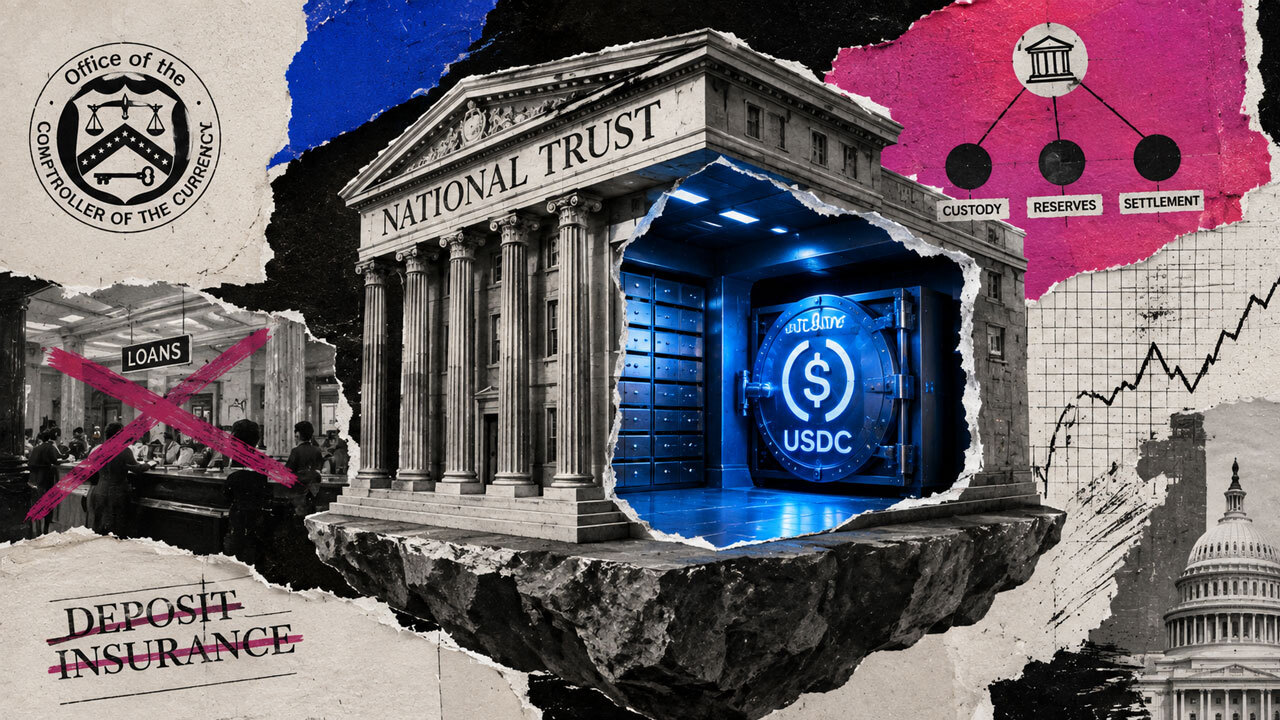
Circle National Trust has secured a federal bank charter that redefines the scope of banking for the digital asset industry. Unlike traditional commercial banks, this new entity does not provide FDIC-insured savings accounts, checking accounts, or mortgages. Instead, it is part of a specialized federal cohort designed specifically for institutional custody, fiduciary administration, and the secure management of stablecoin reserves. By operating under this charter, Circle can facilitate large-scale settlements and asset backing under direct federal oversight, bridging the gap between decentralized finance and regulated banking.
This development signals a shift in the US regulatory landscape, as Circle joins a growing list of major players—including Ripple, BitGo, Paxos, and Fidelity Digital Assets—seeking to legitimize their operations through formal charters. Even traditional financial institutions like Morgan Stanley and new projects like World Liberty Financial are aligning with this new class of service providers. The transition moves these companies away from the 'shadow banking' narrative and places them within a structured regulatory perimeter, even if they lack the consumer-facing features of a typical bank.
For the broader crypto market, the creation of this specific banking class provides a more transparent framework for stablecoin reserves. For years, the lack of clear federal standards for asset backing has been a point of contention and market FUD (fear, uncertainty, and doubt). With a federal charter, Circle and its peers can offer institutional-grade assurance that their reserves are managed according to stringent fiduciary standards, which is a significant prerequisite for further corporate and institutional adoption of digital assets.
Investors and market participants should watch how the Office of the Comptroller of the Currency (OCC) continues to define the boundaries of these non-traditional charters. The primary concern will be how these entities handle liquidity during periods of extreme market volatility and whether this federal status grants them easier access to the Federal Reserve’s payment systems. As more firms like Coinbase and Crypto.com integrate these structures, the competition for compliant US-based custody will likely intensify, potentially lowering costs for institutional investors.