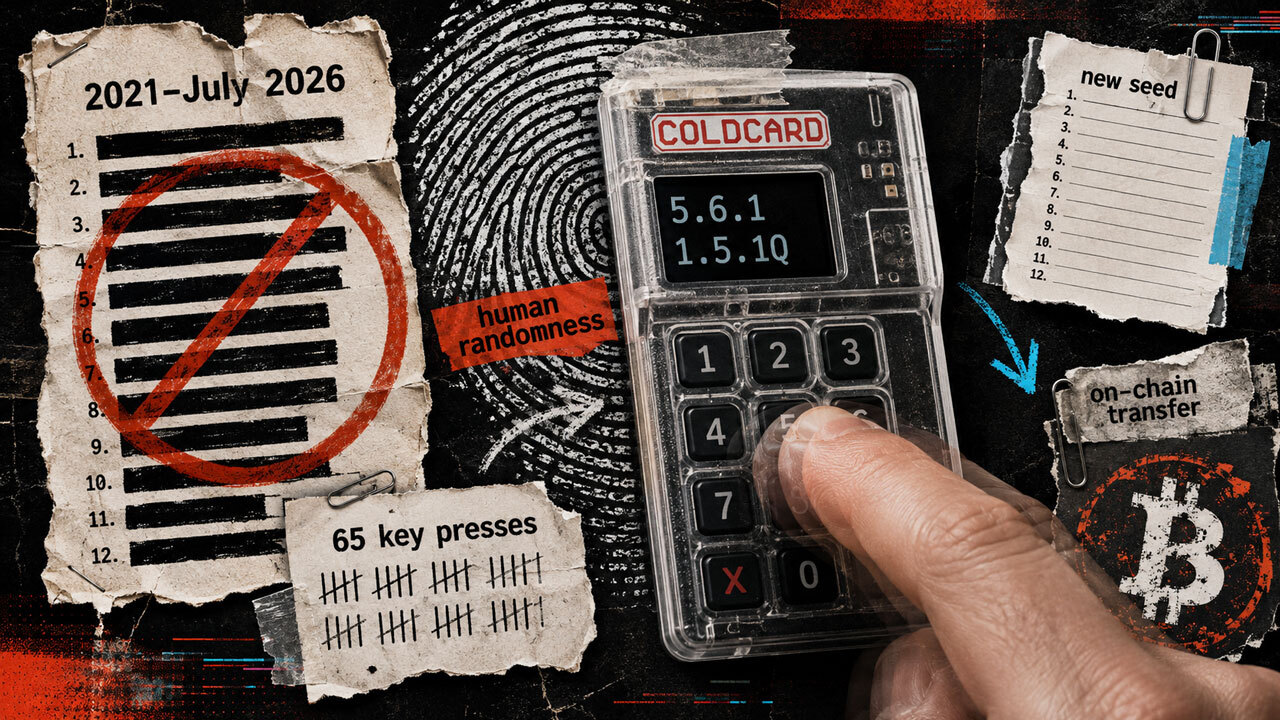
Coinkite has released firmware versions 5.6.1 for the Coldcard Mk4 and 1.5.1Q for the Coldcard Q1 to address a vulnerability related to seed generation entropy. The primary fix involves a new requirement for users to perform 65 manual key presses during the wallet creation process, ensuring that the device captures enough unique physical input to generate a cryptographically secure seed. This change moves away from relying solely on internal hardware components for randomness, which was the core of the potential exploit discovered in earlier versions.
The hardware wallet manufacturer emphasized that while the new firmware hardens the creation of future wallets, it is not a retroactive fix. Any Bitcoin seed generated on the affected previous releases remains potentially compromised regardless of whether the device is updated. Consequently, users who set up their devices using the vulnerable firmware are advised to generate entirely new seeds under the updated protocols and move their assets to these new addresses immediately.
For the US Bitcoin community, which heavily favors Coldcard for its air-gapped security features, this incident underscores the ongoing risks associated with self-custody. While hardware wallets are generally considered the gold standard for security, software-level vulnerabilities in the entropy generation process can lead to predictable private keys, making funds susceptible to brute-force attacks. This update serves as a critical reminder that software maintenance is just as vital as physical security in the crypto space.
Moving forward, investors and privacy advocates should watch for further disclosures from Coinkite regarding the specific technical nature of the exploit. The market impact is currently limited to user sentiment and trust in hardware vendors, but any large-scale theft resulting from un-migrated funds could lead to increased scrutiny from US regulators regarding the 'safety' of self-custody tools. Users are encouraged to verify their current firmware version and follow official migration guides to mitigate risk.