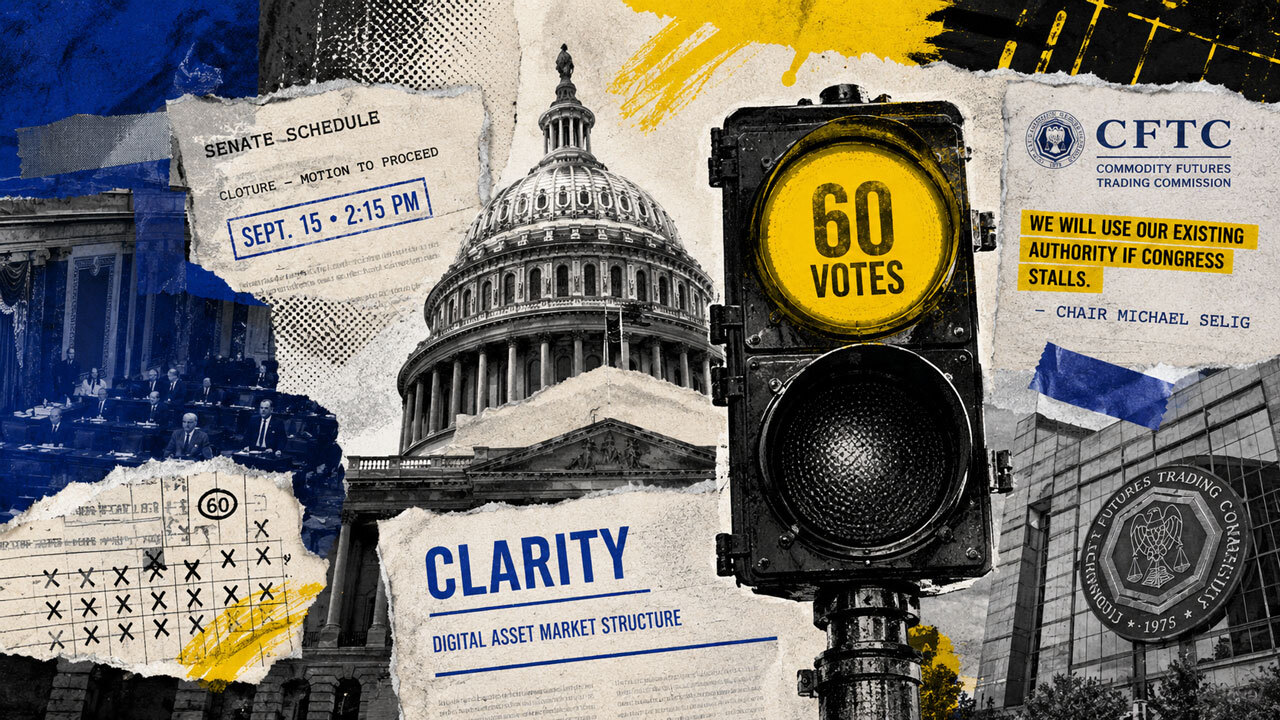
The US Senate has officially set a September date for a cloture vote on the CLARITY Act, a move that will serve as a critical litmus test for the bill’s 60-vote bipartisan coalition. This vote is the primary hurdle for the legislation, which aims to establish a formal regulatory structure for digital assets in the United States. If the bill fails to secure the necessary support, the industry will remain in a state of regulatory uncertainty, as existing authorities are currently fragmented between various federal agencies.
The Commodity Futures Trading Commission (CFTC) has recently signaled that it has limited capacity to act as a fallback if Congress fails to pass the act. While the CFTC can police fraud and manipulation in the commodities markets, the agency has clarified that its existing powers stop short of the full oversight framework that the CLARITY Act would provide. This means that without legislative action, the CFTC cannot implement the comprehensive registration and consumer protection standards that institutional investors are seeking.
Political analysts are focused on whether the bill can maintain its bipartisan momentum amidst a crowded September legislative calendar. The 60-vote threshold is a significant barrier, and any signs of a crumbling coalition could delay crypto regulation until well after the next election cycle. The "limited fallback" from the CFTC underscores the urgency for a legislative solution, as the agency admits it lacks the mandate to provide a holistic environment for crypto market participants on its own.
For the broader crypto market, the outcome of this September vote is a major volatility catalyst. A successful vote would likely be viewed as a milestone for institutional adoption and US market stability. Investors should closely monitor Senate floor announcements in early September and watch for public statements from the CFTC regarding their specific jurisdictional limits in the absence of new laws. The result will dictate whether the US moves toward a clear statutory regime or continues its current path of regulation through enforcement.