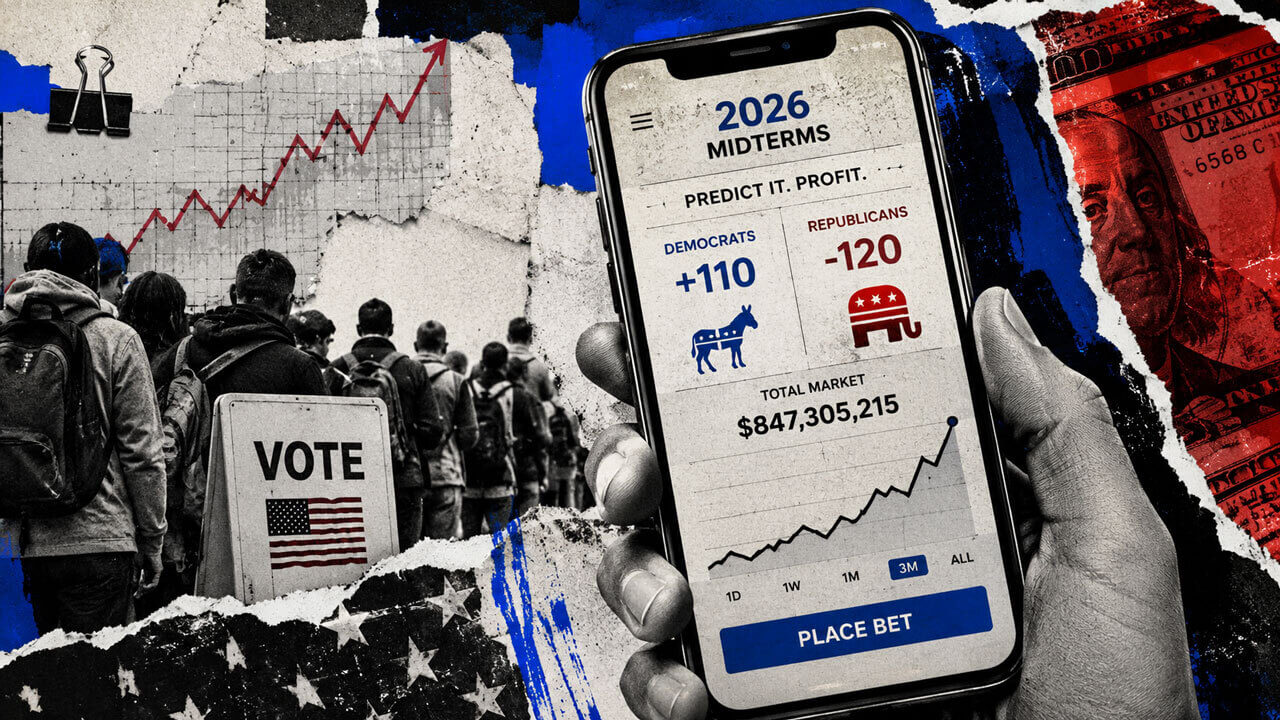
Polymarket’s record-breaking $133 million in midterm election betting volume is largely driven by a small group of "whale" wallets rather than a broad base of retail participants. Recent analysis shows that only 1% of active wallets control the vast majority of the capital positioned on House and Senate races. This creates a significant skew in prediction market odds, where the sentiment of a few high-net-worth individuals can be mistaken for a mass public consensus or a representative sample of the American voting population.
The $133 million total has already surpassed the volume seen in the entire 2024 congressional cycle, highlighting the explosive growth of decentralized prediction markets. However, the data indicates a disconnect between betting activity and actual voter sentiment. As of mid-August, these markets have become a primary source of election speculation, yet the barrier to entry for moving the odds—specifically the large sums required to shift a market—favors institutional or professional traders over average citizens.
This concentration of influence on Polymarket raises questions for US regulators and political analysts who increasingly look to these platforms for real-time polling data. Because these markets are not traditional scientific polls, they are susceptible to market manipulation where a few entities can create the illusion of a shift in political momentum. For US-based observers, this means prediction market data should be viewed as a financial indicator of wealthy speculators rather than a reliable tool for social forecasting.
As the November 3 midterms approach, observers should watch for sudden volatility in betting odds caused by large wallet movements. While Polymarket provides a decentralized alternative to traditional betting, the lack of participant diversity suggests that the "wisdom of the crowd" might actually be the "wisdom of the few." Investors and political followers should cross-reference these crypto-based odds with traditional scientific polling to avoid being misled by whale-driven price action.