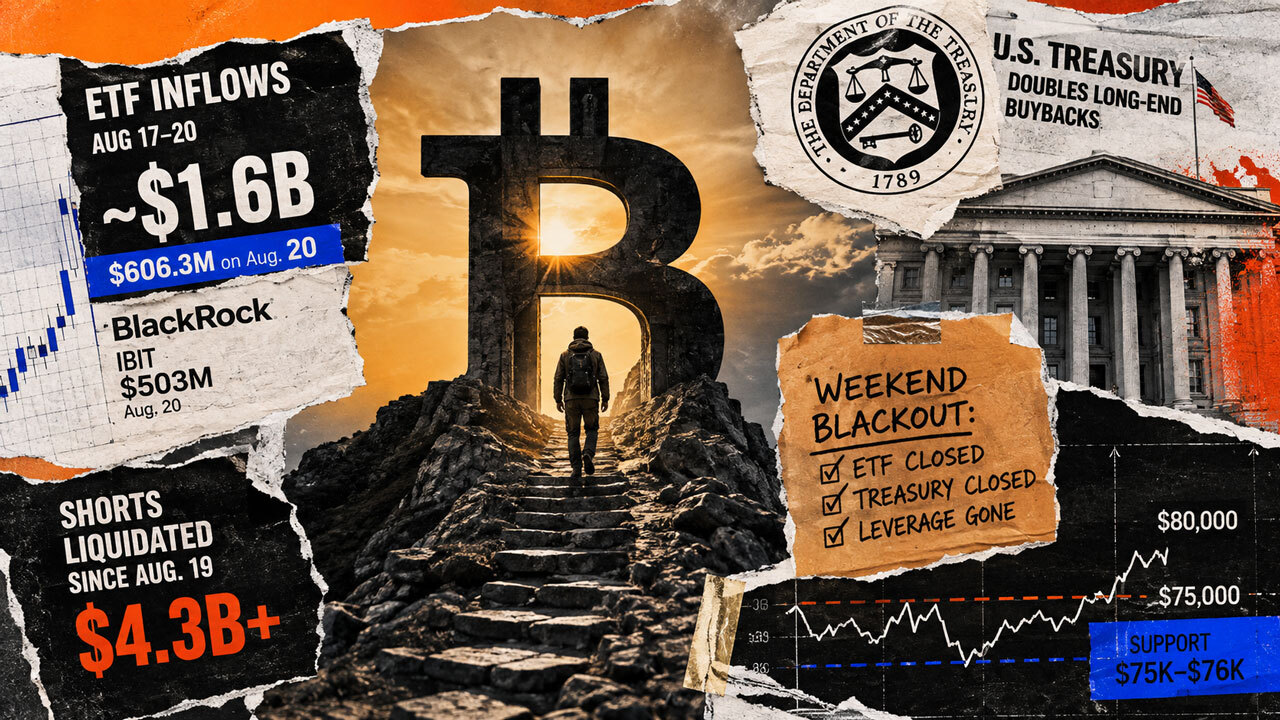
Bitcoin reached an intraday high of $79,500 on August 21, fueled by a rare convergence of macroeconomic and institutional catalysts. The price surge was primarily triggered by a surprise U.S. Treasury intervention that improved market liquidity, alongside approximately $1.6 billion in spot ETF inflows and billions of dollars in forced short liquidations. This momentum has brought the leading cryptocurrency within striking distance of the psychological $80,000 barrier, marking a significant milestone for the current market cycle.
The rally represents the most aggressive weekly gain for Bitcoin in two years, highlighting the growing impact of institutional products on price discovery. The $1.6 billion in spot ETF inflows indicates that American institutional investors were aggressively accumulating Bitcoin throughout the week. However, the timing of this peak coincides with the weekend, a period where the institutional "ETF bid" disappears as traditional stock exchanges close, leaving the market to rely on 24/7 crypto-native exchanges for price support.
From a regulatory and geopolitical perspective, the Treasury's intervention served as a critical tailwind. By adjusting fiscal mechanisms that impact liquidity, the government inadvertently created a favorable environment for risk-on assets like Bitcoin. This macro backdrop, combined with the technical pressure of short sellers being forced to buy back their positions (liquidations), accelerated the upward move faster than most analysts anticipated.
As the market enters the weekend without the cushion of ETF buying volume, investors should watch for increased volatility. The key question for the coming days is whether Bitcoin can sustain its position above $79,000 or if the absence of institutional trading will lead to a temporary retracement. If the $80,000 level is breached, it could trigger a new wave of retail FOMO (fear of missing out) heading into the next U.S. trading week.