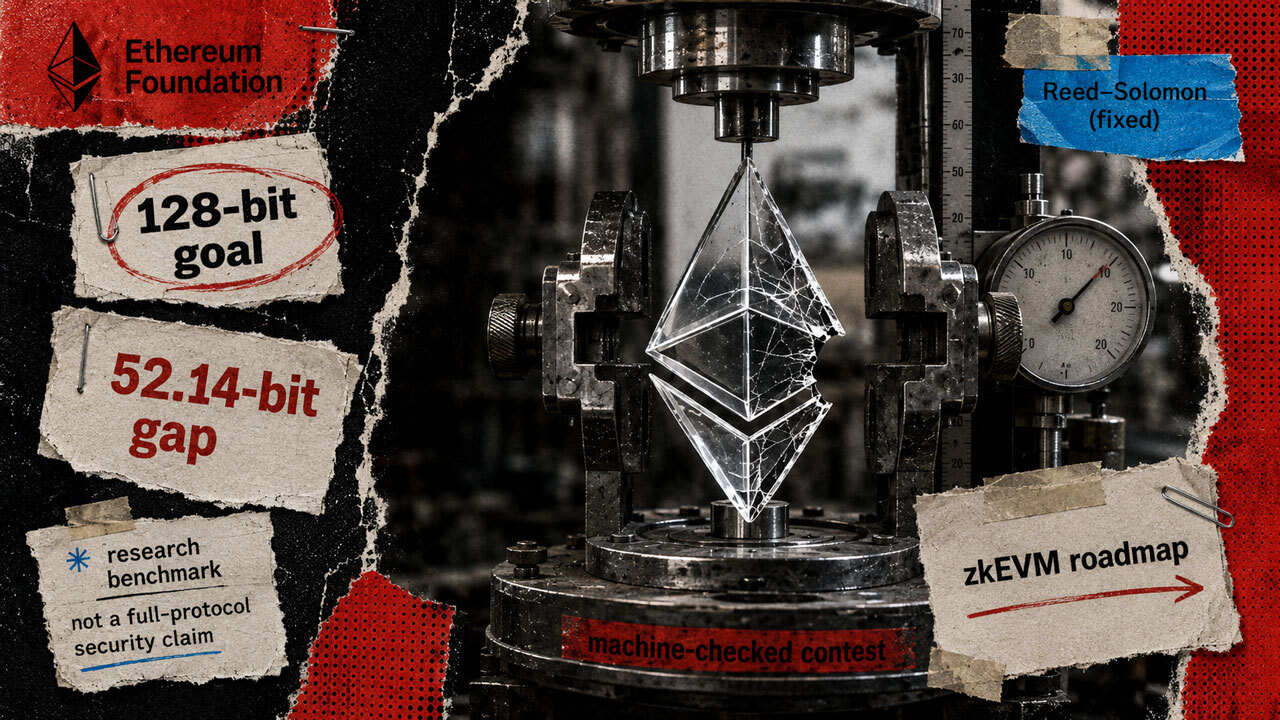
Ethereum researchers are currently working to bridge a critical security gap within zero-knowledge Ethereum Virtual Machine (zkEVM) implementations before a December deadline. The gap involves a lack of alignment between Ethereum’s abstract security targets and the live certificates generated by zero-knowledge proof systems. The better.codes contest has been launched to pressure-test these systems, ensuring that the mathematical proofs protecting user funds on Layer 2 networks are as robust in practice as they are in theory.
The initiative specifically focuses on reconciling discrepancies within proof systems, with current scoring metrics like koalaIRS12 highlighting the narrow technical focus of these tests. zkEVMs are essential for Ethereum’s long-term scaling strategy, as they allow for high-speed transactions without sacrificing the underlying security of the Ethereum mainnet. However, if the proofs generated by these systems do not perfectly match the protocol's security requirements, it could leave the door open for sophisticated exploits on Layer 2 platforms.
For the US crypto market, this security race carries significant weight regarding regulatory and institutional adoption. As US regulators like the SEC increasingly focus on the technical integrity of DeFi protocols, the ability of the Ethereum community to self-regulate and fix vulnerabilities before they are exploited is vital. A successful resolution of this security gap by December would provide a much-needed confidence boost for institutions looking to deploy capital into Ethereum-based scaling solutions.
Moving forward, investors and developers should closely monitor the outcome of the better.codes contest and the subsequent updates to zkEVM protocols. A successful fix by the December deadline will likely accelerate the transition toward more decentralized "Stage 2" rollups. Conversely, any failure to close this gap could lead to a temporary cooling of sentiment regarding the readiness of zero-knowledge technology for mass-market financial applications.