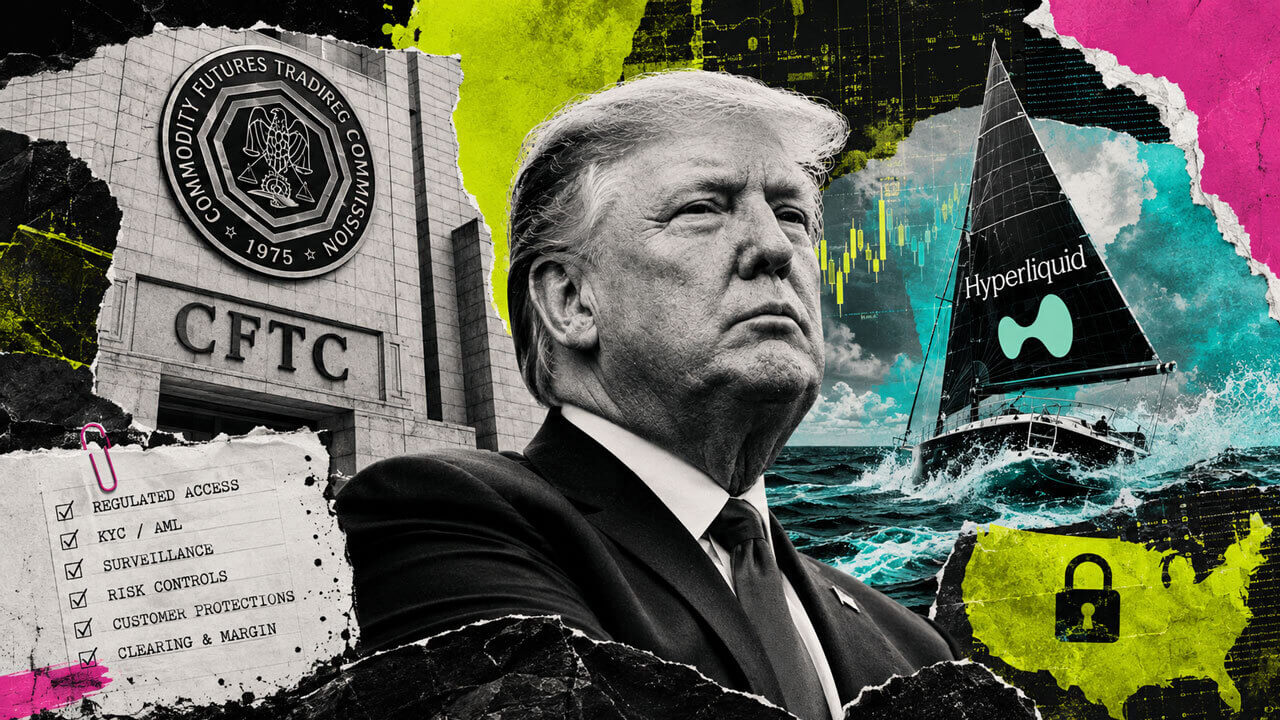
In a strategic pivot for U.S. digital asset policy, President Donald Trump revealed that CFTC Chair Michael Selig is actively developing a regulatory pathway to onboard Hyperliquid, the world's leading on-chain perpetual futures venue. Currently, Hyperliquid operates as an offshore entity, strictly geofencing U.S. residents to avoid the scrutiny of domestic regulators. This initiative aims to transition the platform into a fully compliant U.S.-based exchange, potentially reshaping how decentralized finance (DeFi) interacts with federal oversight.
The development comes as Hyperliquid maintains its status as a behemoth in the DeFi space, having recently surpassed a cumulative volume of $200 billion. By targeting an onshore launch, the administration appears to be pivoting toward a 'growth through compliance' strategy, attempting to end the era of regulatory exile for major crypto liquidity hubs. This aligns with broader political signals favoring U.S. leadership in the digital asset sector and the repatriation of high-volume trading activity.
For the markets, a compliant Hyperliquid could unlock massive institutional flows that were previously sidelined by jurisdictional risks. If successful, this framework could serve as a blueprint for other offshore giants to re-enter the U.S. market, drastically increasing the depth of domestic on-chain trading. Traders should watch for specific rule changes at the CFTC that could lower the barrier for decentralized derivatives and provide clear definitions for on-chain venue operations.
Investors should monitor how this move affects the competitive landscape between traditional centralized exchanges and decentralized rivals. A legal, U.S.-based Hyperliquid would pose a direct threat to existing domestic venues while validating the longevity of high-performance app-chains. The key indicator for market participants will be the formal release of the CFTC's revised rulebook, which will dictate the feasibility of this transition.