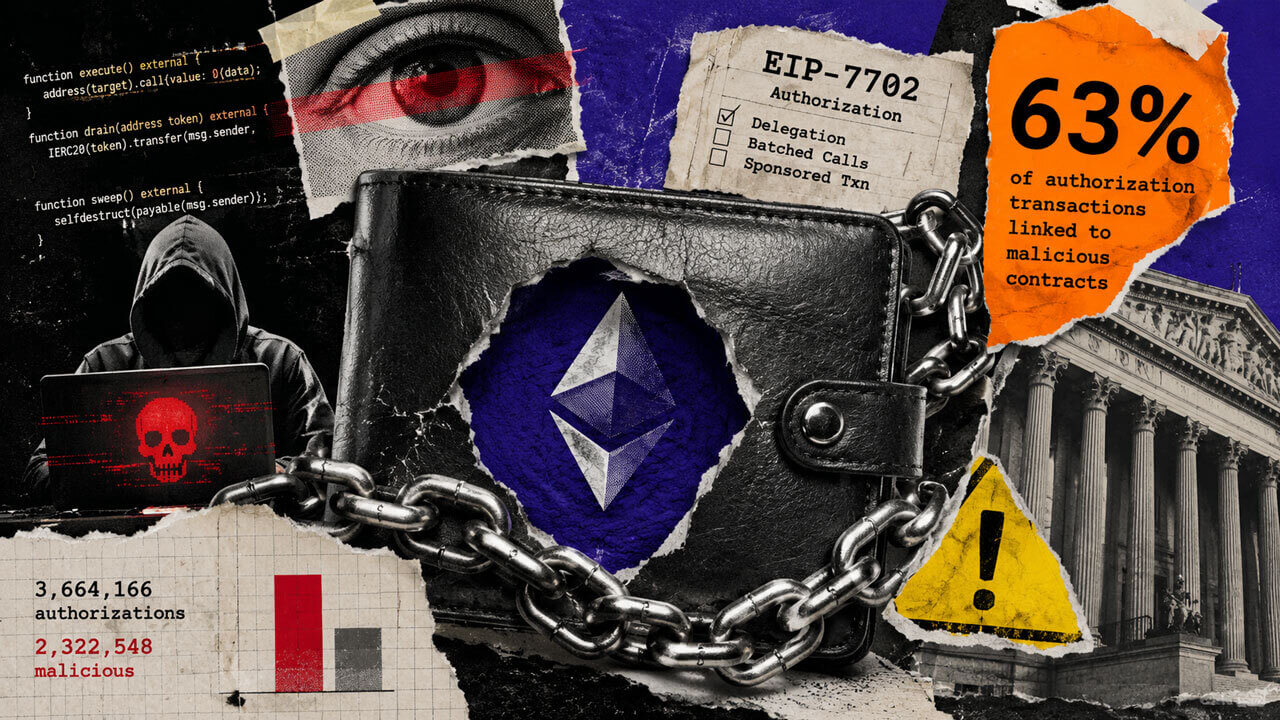
Recent forensics into Ethereum’s latest smart wallet infrastructure reveal a troubling trend: malicious actors are currently the primary users of new 'authorization' features. According to research, 63% of all historical transactions involving these specific smart wallet contracts were initiated by attacker-linked addresses. The feature, designed to allow standard accounts to delegate permissions to smart contracts for better user experience, has instead become a vector for roughly $2.36 million in stolen funds.
This development poses a significant challenge for Ethereum’s roadmap, specifically regarding the push for Account Abstraction (AA). While these features are intended to make crypto wallets as easy to use as email, the high rate of exploit-driven activity suggests that the security guardrails are not yet sufficient for mainstream adoption. For US-based users and platforms, this underscores the regulatory concerns often cited by the SEC regarding the safety of decentralized infrastructure and consumer protection in the DeFi space.
From a market perspective, the immediate financial impact is relatively contained at $2.36 million, but the reputational risk to Ethereum’s upgrade cycle is noteworthy. If developers cannot secure these authorization mechanisms, the transition away from traditional private keys could be delayed. Investors should watch for upcoming Ethereum Improvement Proposals (EIPs) aimed at patching these vulnerabilities and monitor whether major wallet providers like MetaMask or Safe delay their integration of similar features until security stabilizes.