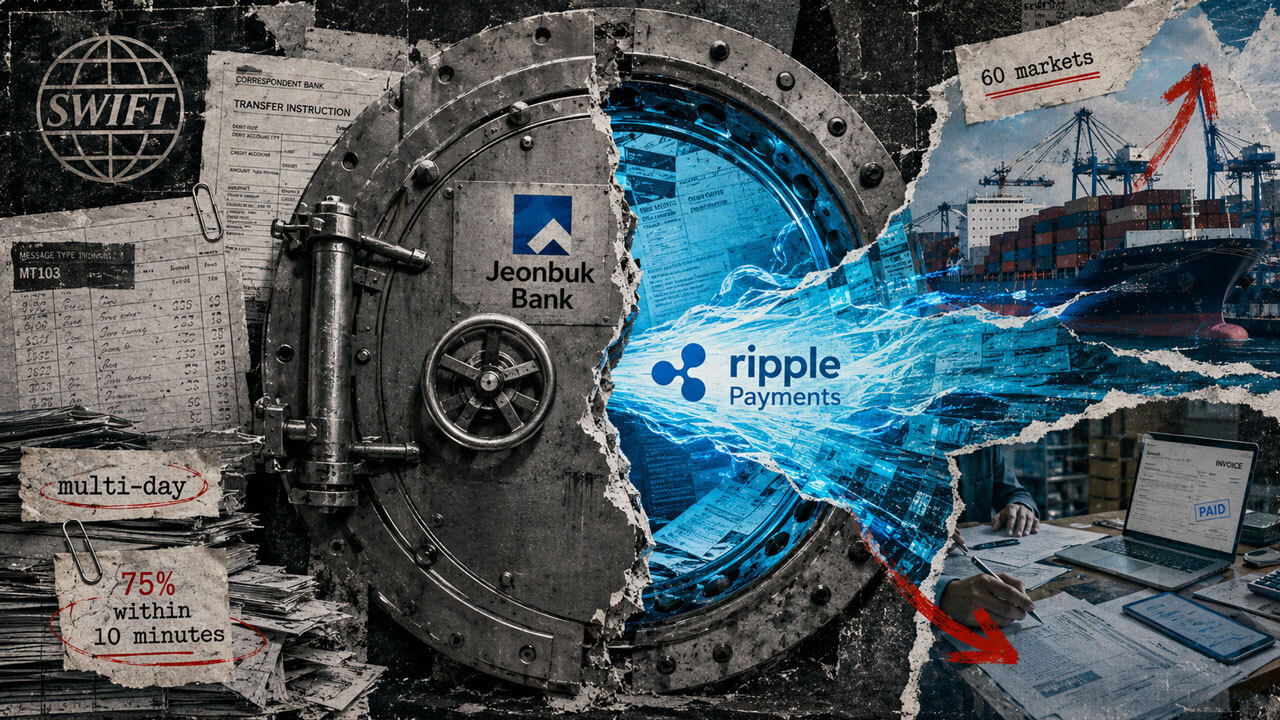
Ripple is accelerating its global expansion, recently onboarding South Korea’s Jeonbuk Bank to its Ripple Payments network. This move marks the first time a regional South Korean lender has bypassed the legacy SWIFT system in favor of blockchain-based cross-border business transfers, promising near-instant settlement. Parallel to this, Ripple's prime brokerage arm successfully secured $275 million in funding, significantly bolstering the company's liquidity infrastructure for institutional clients and market-making capabilities.
This development highlights a diverging trend between U.S. regulatory friction and international adoption. While Ripple continues its long-standing legal battle with the SEC, Asian financial institutions are increasingly integrating Ripple’s technology to solve real-world inefficiencies in correspondent banking. South Korea’s proactive stance on crypto-banking integration serves as a potential blueprint for other regional hubs looking to modernize their financial rails outside of traditional Western systems.
For XRP traders, these fundamental wins provide a strong bullish backdrop, yet the market remains focused on technical resistance levels and broader macroeconomic factors. The capital raise for Ripple’s prime brokerage suggests a scaling up of institutional services, which could drive long-term demand for XRP as a bridge currency. Investors should closely monitor XRP’s ability to hold key support levels and watch for further institutional announcements, as these will likely dictate whether the token can sustain a rally amidst the regulatory uncertainty in the United States.