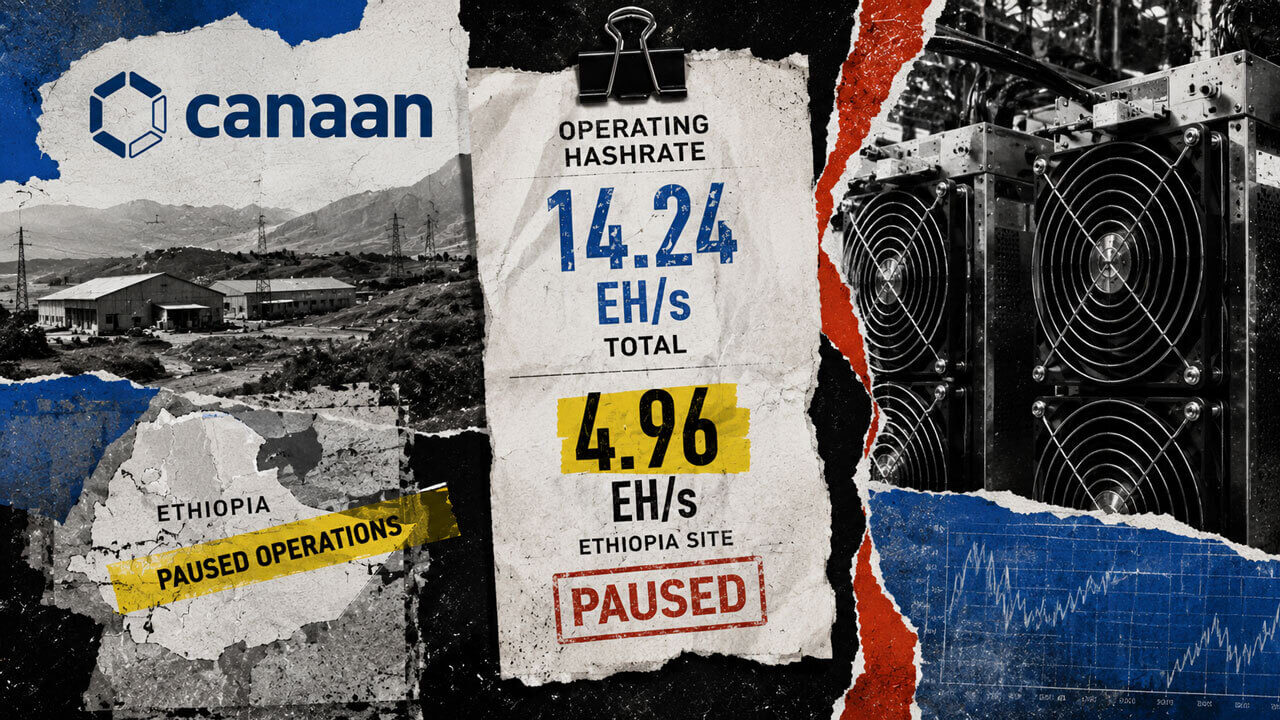
Canaan (NASDAQ: CAN), a major player in the Bitcoin mining hardware space, has sparked industry debate after its July production report included significant offline capacity as 'operating.' While the firm headlined an operating hashrate of 4.96 EH/s, a critical footnote disclosed that its mining operations in Ethiopia were actually paused. This Ethiopian segment accounts for approximately 1.7 EH/s, or nearly 35% of the company's stated total.
The situation underscores the geopolitical and infrastructure risks associated with mining in emerging markets. Ethiopia has recently emerged as a destination for cheap hydroelectric power, yet the region remains plagued by grid instability and shifting regulatory mandates that can force immediate shutdowns. For Canaan, counting these inactive machines as part of their operating total raises questions about standardizing reporting across the industry.
From a market perspective, this lack of clarity could lead to inflated revenue expectations and valuation models for mining stocks. Investors typically rely on hashrate as a proxy for future Bitcoin production; if a third of that capacity is non-functional, the actual production delta could surprise the downside during quarterly earnings calls.
Traders should watch for whether Canaan provides a timeline for resuming Ethiopian operations or if this indicates a more permanent pivot away from the region. Furthermore, as US-based miners face increasing competition, any perceived 'padding' of operational metrics may lead to increased scrutiny from analysts and regulators regarding how public firms define deployed versus active hardware.