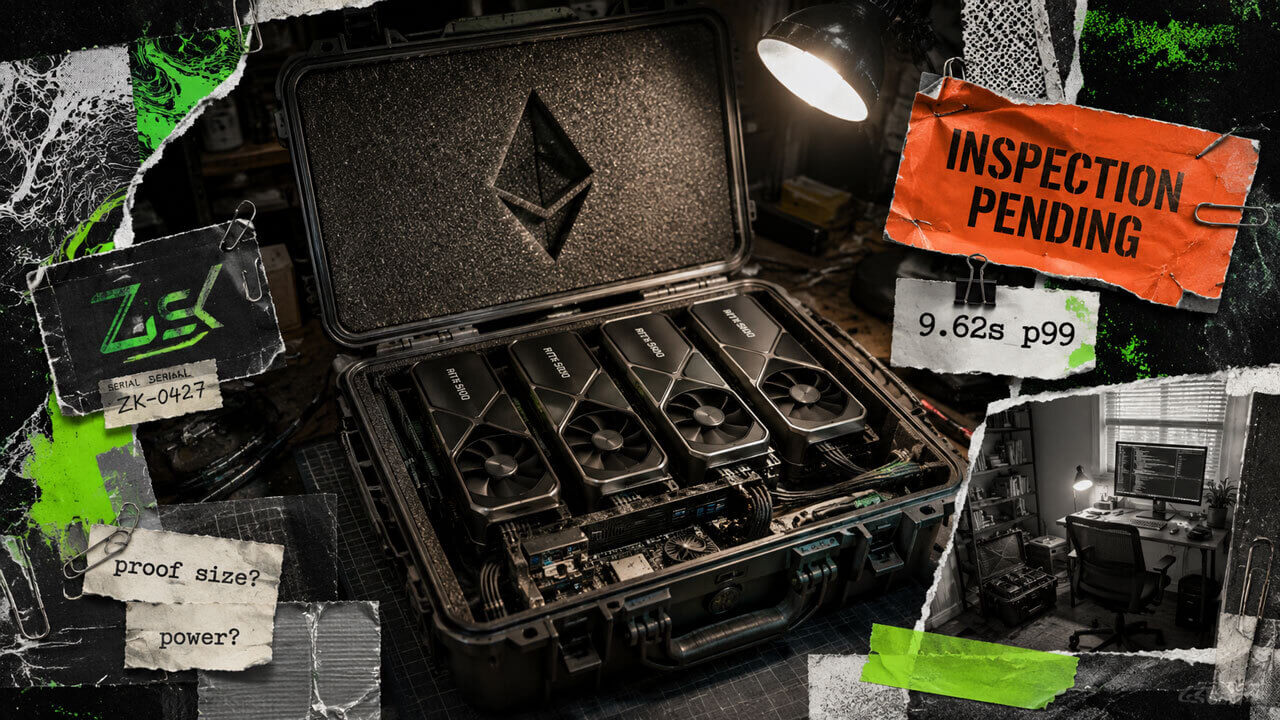
A new advancement in ZK-proving hardware efficiency has achieved a 9.62-second p99 latency—meeting Ethereum's rigorous performance targets—while utilizing only four GPUs instead of the traditional twelve. This 66% reduction in hardware overhead directly addresses the 'proving problem,' a long-standing bottleneck that has made high-speed ZK-Rollups both expensive and resource-intensive to operate. By lowering the entry barrier for proving nodes, this development paves the way for a more decentralized and cost-effective Layer 2 ecosystem.
From a technical and geopolitical standpoint, reducing hardware reliance is crucial for Ethereum’s resilience. As global supply chains for high-end GPUs remain volatile and subject to trade restrictions, software-driven efficiency gains ensure that blockchain infrastructure can remain operational on more accessible consumer-grade or mid-tier hardware. This shift supports Ethereum's long-term roadmap of 'The Purge' and 'The Verge,' focusing on making node operation as lightweight as possible.
For investors and traders, this efficiency leap is a long-term bullish indicator for the Ethereum ecosystem. Lower infrastructure costs for Layer 2 sequences typically translate to lower gas fees for end-users and higher profit margins for network operators. While the full power consumption and workload details remain undisclosed, market participants should watch for the adoption of this four-GPU standard by major ZK-projects, which could act as a catalyst for increased network activity and ETH utility.