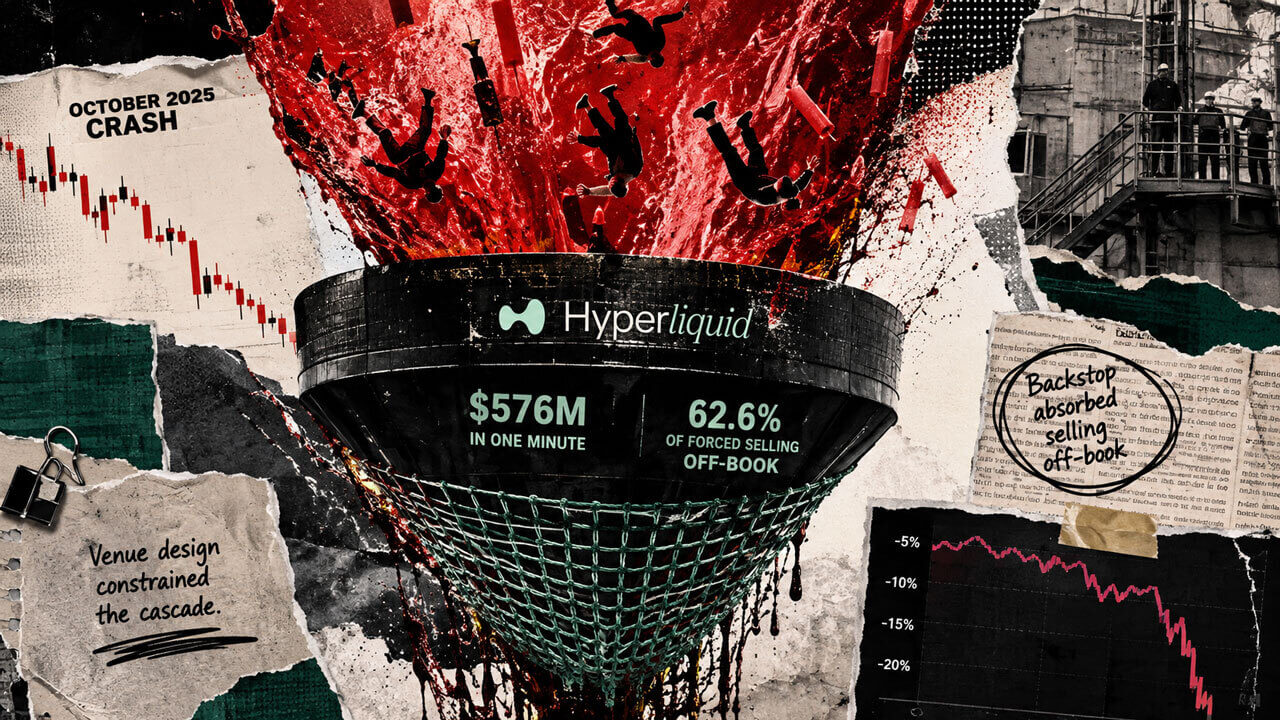
Decentralized perpetual exchange Hyperliquid successfully navigated a potential protocol failure by routing $576 million in liquidations through off-book channels. According to a recently published research preprint, this tactical shift prevented massive forced sales from hitting public order books, which would have likely triggered a cascading price collapse across the protocol's liquidity pools. This damping effect allowed the platform to maintain stable operations during periods of extreme volatility that might have otherwise wiped out its solvency.
The study highlights the effectiveness of off-book routing as a sophisticated circuit-breaking mechanism for DeFi protocols. While traditional finance utilizes dark pools for similar purposes, the implementation in a transparent, on-chain environment underscores a maturing risk-management stack within decentralized finance. The data suggests that by internalizing or redirecting these liquidation flows, Hyperliquid avoided the systemic feedback loops that have historically plagued its competitors.
From a regulatory perspective, this development arrives as US authorities intensify their scrutiny of decentralized exchange (DEX) operations and the transparency of order execution. While shifting sales off-book protected the protocol, it raises questions about market discovery and whether such mechanisms provide an unfair advantage or obscure true price action. Traders should view this as a double-edged sword: it provides a safer trading environment but introduces complexity in how 'best execution' is defined in a decentralized context.
Moving forward, investors should monitor whether other major perpetual DEXs adopt similar liquidation-dampening strategies. The success of this $576 million intervention could become a blueprint for institutional-grade DeFi risk management. Watch for upcoming research on how these off-book movements impacted the wider market, as those effects remain largely untested and could present hidden risks during the next major market drawdown.