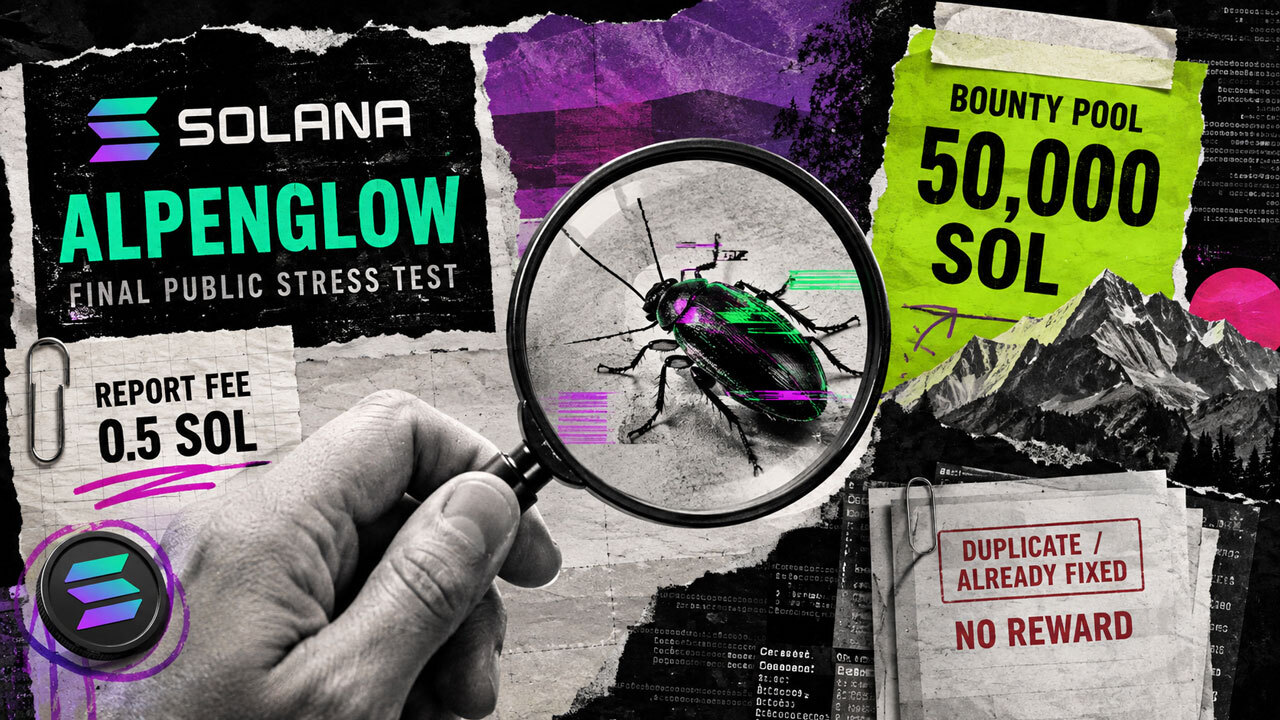
Anza, a prominent Solana development firm, has officially introduced the Alpenglow bug bounty program to bolster the network's resilience. While the program offers a massive reward ceiling of 50,000 SOL for critical vulnerability discoveries, it includes a controversial 'pay-to-report' mechanic. Security researchers are required to deposit 0.5 SOL to file a claim, a move designed to filter out spam and low-quality submissions in a high-traffic ecosystem.
This unconventional approach shifts the financial risk onto the white-hat community. If a bug is deemed a duplicate or falls outside the program's shifting eligibility rules, the researcher effectively loses their deposit. This departure from industry-standard bounty platforms, which typically offer free submission paths, has raised concerns about whether this creates a barrier to entry for independent developers who identify legitimate but less 'obvious' flaws.
For Solana investors, this development is a double-edged sword. On one hand, the massive 50,000 SOL incentive demonstrates a serious commitment to hardening the protocol against the outages that have historically plagued the chain. On the other, if the filing fee discourages participation, the network remains vulnerable to exploits that could have been caught earlier. Traders should monitor developer sentiment and the frequency of reported patches to gauge if the Alpenglow program successfully attracts or alienates the security community.