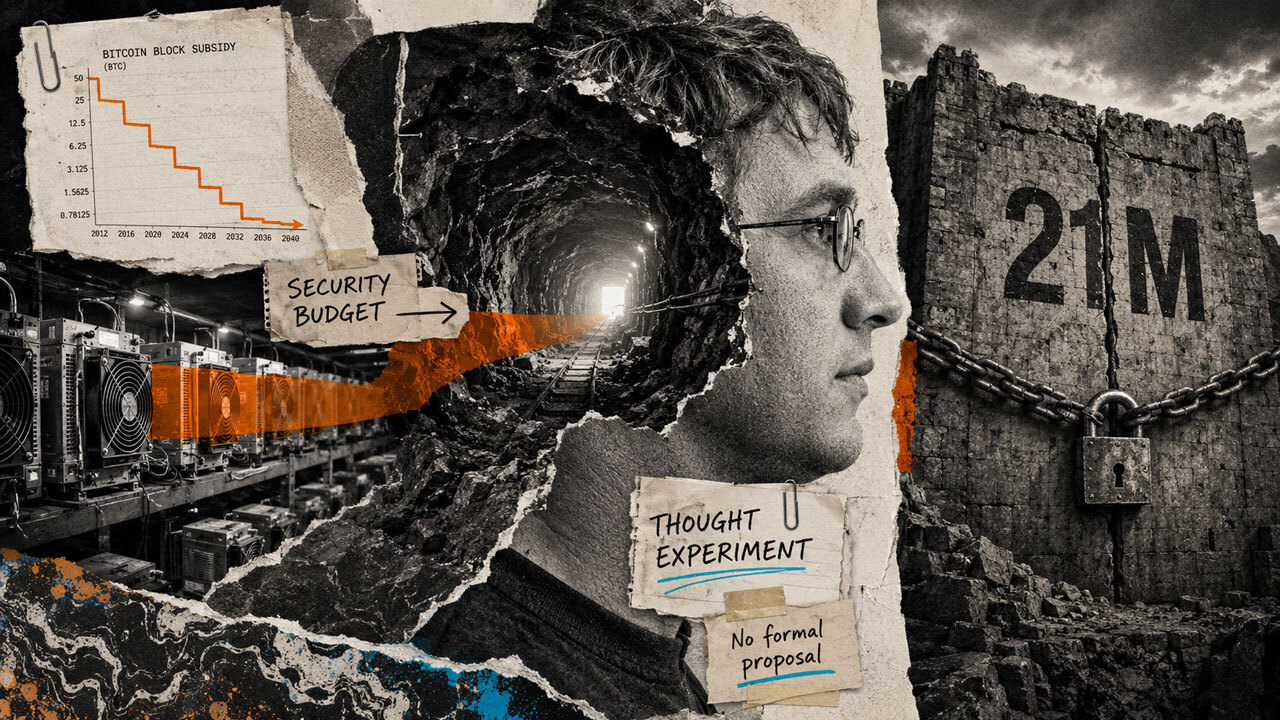
Prominent Bitcoin developer Peter Todd has sparked a firestorm in the crypto community by questioning the sustainability of Bitcoin’s fixed 21 million supply cap. Todd highlighted a critical vulnerability: with transaction fees currently accounting for a mere 0.5% of total miner revenue, the network's security budget may become insufficient as the block subsidy continues to halve every four years. If fees do not scale to replace the subsidy, the cost to attack the network could drop, potentially compromising Bitcoin's integrity.
Technically, the debate centers on the introduction of a 'tail emission'—a small, permanent inflation rate similar to Monero—to ensure miners remain incentivized to secure the chain. However, any move to alter the 21 million cap is seen as a violation of Bitcoin’s 'social contract.' From a regulatory and market perspective, Bitcoin’s fixed supply is its primary selling point for institutional investors and a core component of its 'digital gold' narrative. A shift in this policy would represent a fundamental change in the asset's economic profile.
For traders and long-term holders, this debate serves as a reminder that Bitcoin's long-term security is not yet guaranteed by organic usage alone. Market participants should closely monitor the growth of the Bitcoin fee market, driven by developments like Ordinals, Layer-2 scaling solutions, and institutional throughput. While a hard fork to change the supply remains highly unlikely in the near term, the discourse itself highlights the critical need for Bitcoin to evolve from a speculative store of value into a high-utility network to ensure its survival without inflation.