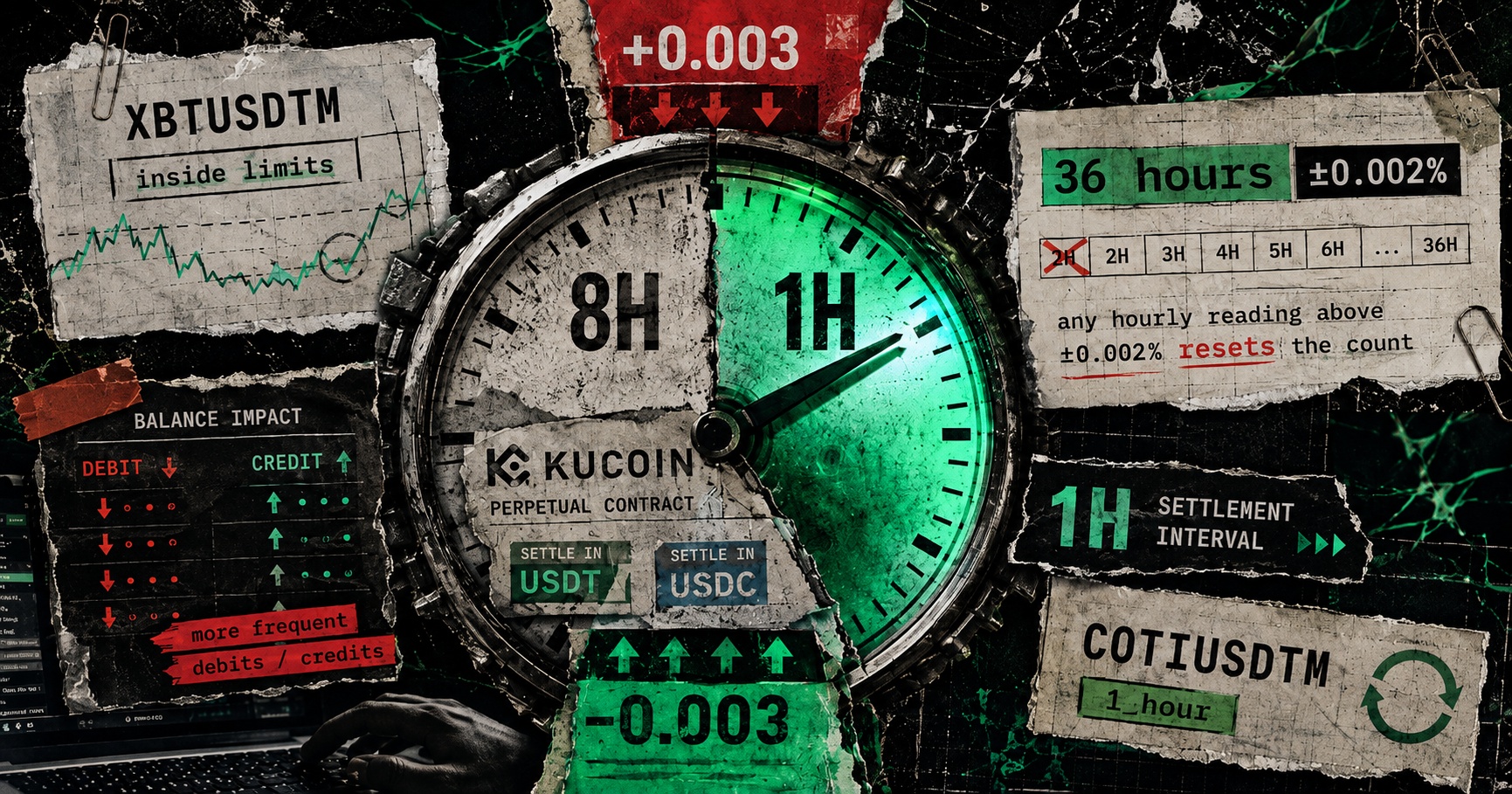
KuCoin is introducing a pivotal shift in its derivatives framework aimed at curbing volatility in its perpetual swap markets. The exchange announced that USDT and USDC-margined contracts will now transition to hourly funding settlements whenever funding rates hit extreme thresholds. This move is designed to recalibrate the cost of holding leveraged positions more frequently, preventing the buildup of systemic risk during rapid price discovery phases.
The new rule includes a stringent 'cooling-off' requirement: once a contract moves to hourly settlements, it must maintain stable funding rates for 36 consecutive hours before the platform reverts to the standard four-hour settlement window. This 36-hour buffer ensures that the market has truly stabilized before decreasing the frequency of rate adjustments, potentially trapping high-leverage traders in costly funding cycles for extended periods.
From a market perspective, this reflects a broader trend of exchanges self-regulating to avoid the cascading liquidations that have previously drawn the ire of global financial regulators. While this enhances platform stability, US-based and international traders using the platform must now account for increased 'theta' or carry costs during breakout events. The 36-hour lock-in period means that even if a price spike is brief, the financial impact on leveraged long or short positions could persist for a day and a half.
Traders should closely monitor KuCoin’s funding dashboards, as the switch to hourly settlements could serve as an early warning signal for sustained volatility. For the broader market, this mechanism may reduce the 'wicking' seen during funding arbitrage but could also lead to a migration of liquidity to platforms with less frequent settlement triggers if the costs become prohibitive.