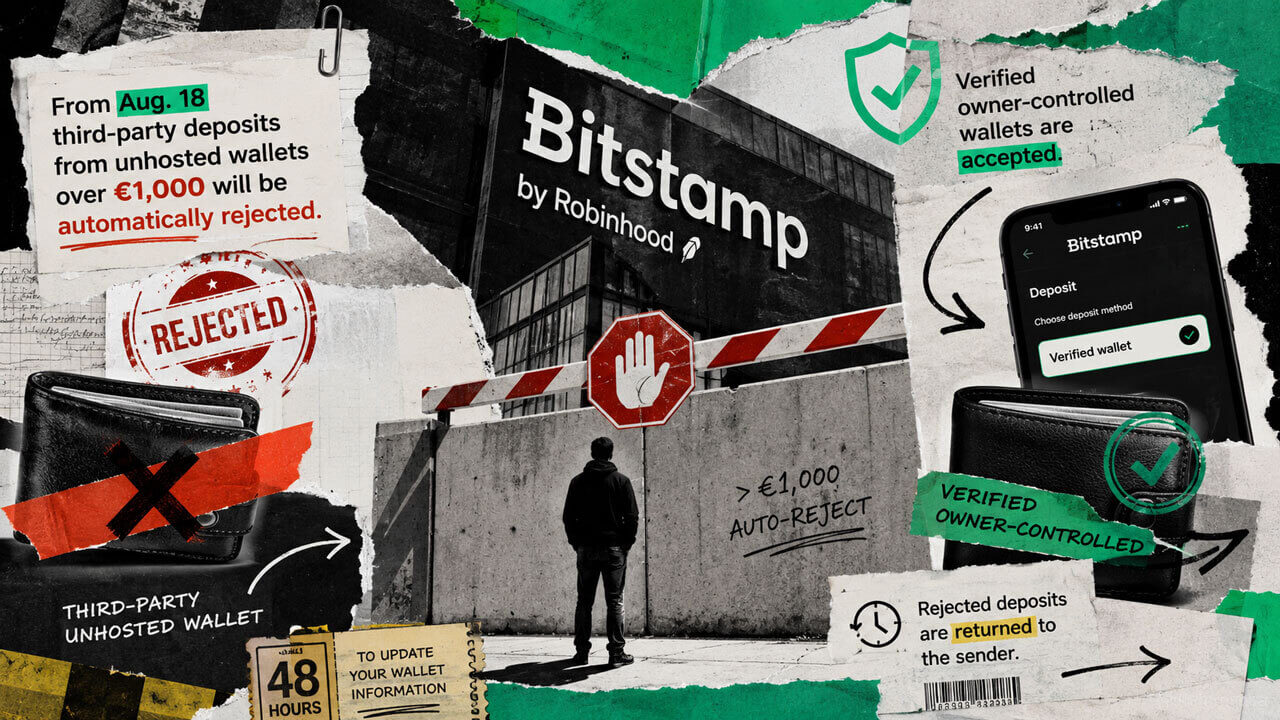
Bitstamp users have been alerted to a new policy starting tomorrow that will reportedly freeze incoming crypto payments exceeding €1,000. While transfers between verified exchanges remain unaffected, payments originating from private wallets or third-party providers that hit this threshold will require additional verification or face rejection. This change marks a significant shift in how the exchange handles non-custodial interactions.
This development is a direct response to the European Union's Transfer of Funds Regulation (TFR), part of a broader push to bring crypto-assets under stricter Anti-Money Laundering (AML) oversight. The 'Travel Rule' effectively mandates that service providers identify the sender and receiver of every transaction, significantly impacting how users interact with centralized platforms within the Eurozone.
Market participants should prepare for increased friction when moving assets between self-custody and centralized exchanges. The requirement for manual support intervention to reclaim rejected funds adds a layer of operational risk and administrative burden for high-value traders. Investors should watch for other major exchanges following suit, as this could lead to a fragmented liquidity landscape between regulated and unregulated environments.
Traders are advised to verify the origin of their funds and ensure all documentation is ready before moving significant capital onto European platforms. As regulatory walls grow higher, the gap between 'clean' KYC-compliant liquidity and decentralized flows continues to widen, potentially impacting localized market premiums.