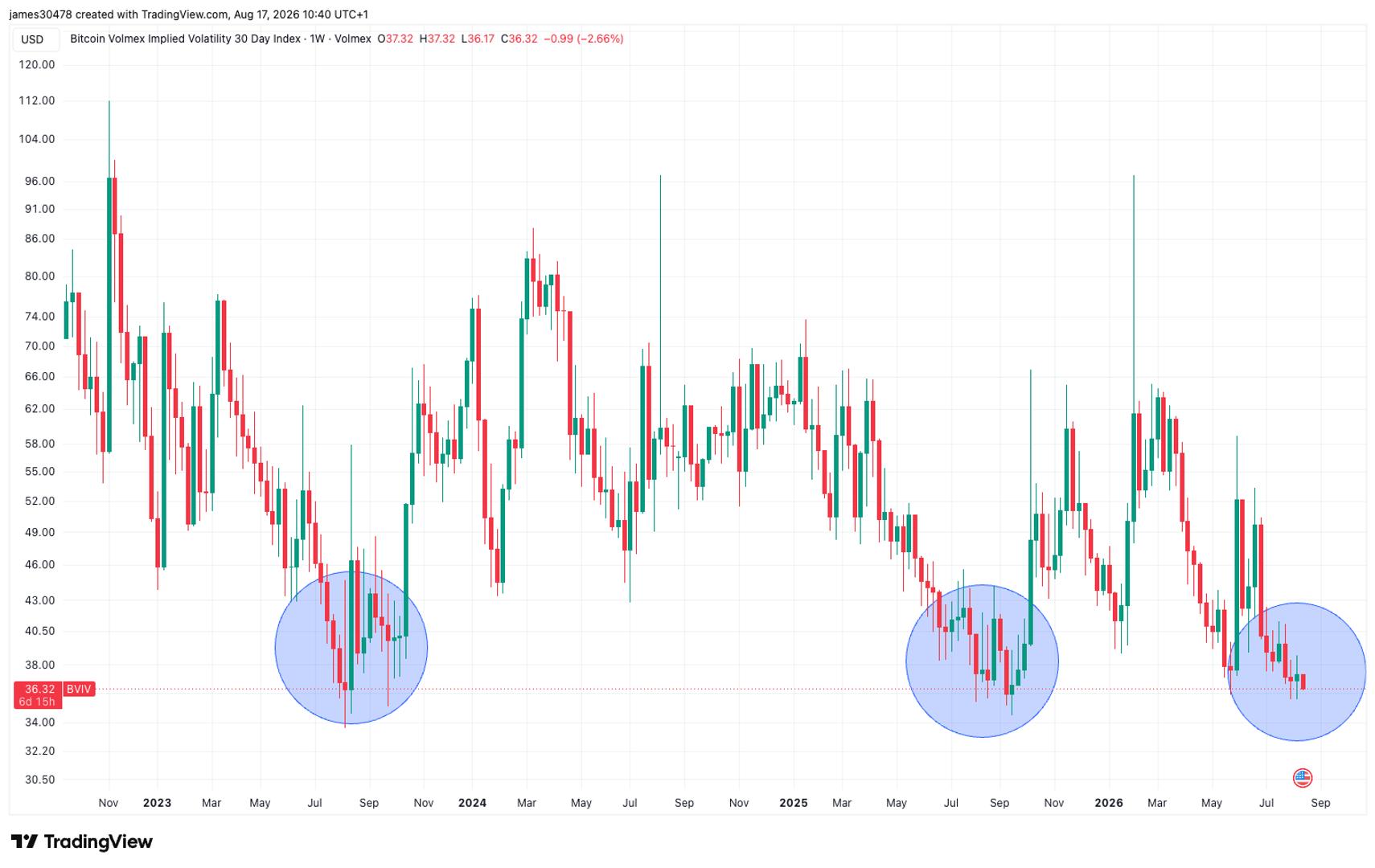
Bitcoin's realized volatility has plummeted to seasonal lows, reflecting the typical summer doldrums across global financial markets. However, implied volatility—the market's forecast of future price swings—has not followed suit. This means options buyers are currently paying a significant premium for protection or speculation compared to the actual price movement Bitcoin has exhibited over the last month.
This phenomenon is unfolding against a backdrop of significant macro uncertainty. US-based traders are navigating a complex environment characterized by shifting Federal Reserve interest rate expectations and the intensifying political rhetoric surrounding the upcoming presidential election. These regulatory and geopolitical overhangs are preventing options dealers from lowering their guard, as they price in potential 'black swan' events or sudden policy shifts that could disrupt the current range-bound trading.
For institutional investors, the current environment makes 'selling volatility' an attractive, albeit risky, yield-generating strategy. Traders should closely monitor the volatility surface for a potential 'volatility crush' if price action remains stagnant, or a sharp gamma squeeze if Bitcoin breaks out of its current corridor. The key level to watch is the 30-day implied volatility vs. realized volatility spread, which currently indicates that the market is overpaying for anticipated drama that has yet to materialize.