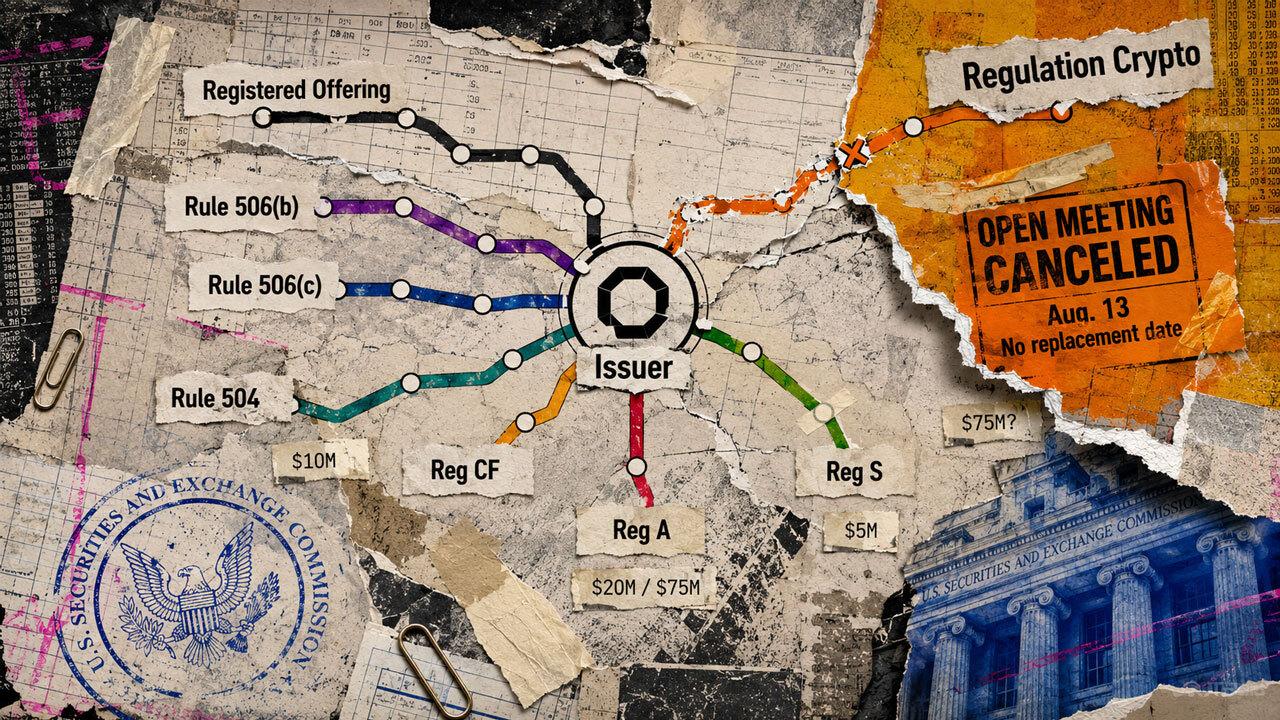
The U.S. Securities and Exchange Commission (SEC) has abruptly canceled a meeting intended to address fundraising paths for crypto projects, leaving token issuers without a dedicated framework for development capital. While recent agency guidance attempted to separate tokens from investment contracts, the underlying mechanism for raising funds remains tied to general securities exemptions. This lack of a 'middle ground' for crypto startups forces them into expensive and complex compliance regimes designed for traditional finance.
From a regulatory standpoint, this suggests a continuation of the SEC’s enforcement-first approach under current leadership. The cancellation signals that a tailored safe harbor for crypto-native fundraising is not a priority, contrasting sharply with more progressive digital asset frameworks being adopted in the EU and Asia. This regulatory friction remains a primary bottleneck for the U.S. crypto ecosystem as projects weigh the risks of domestic operations.
For investors and traders, this development is a reminder of the persistent legal risks facing new projects. The lack of clarity may result in fewer high-quality U.S.-based token launches in the near term and could drive talent to offshore markets. Market participants should watch for potential legislative intervention via the FIT21 bill or legal challenges to the SEC’s authority as the only likely catalysts for a more permissive fundraising environment.