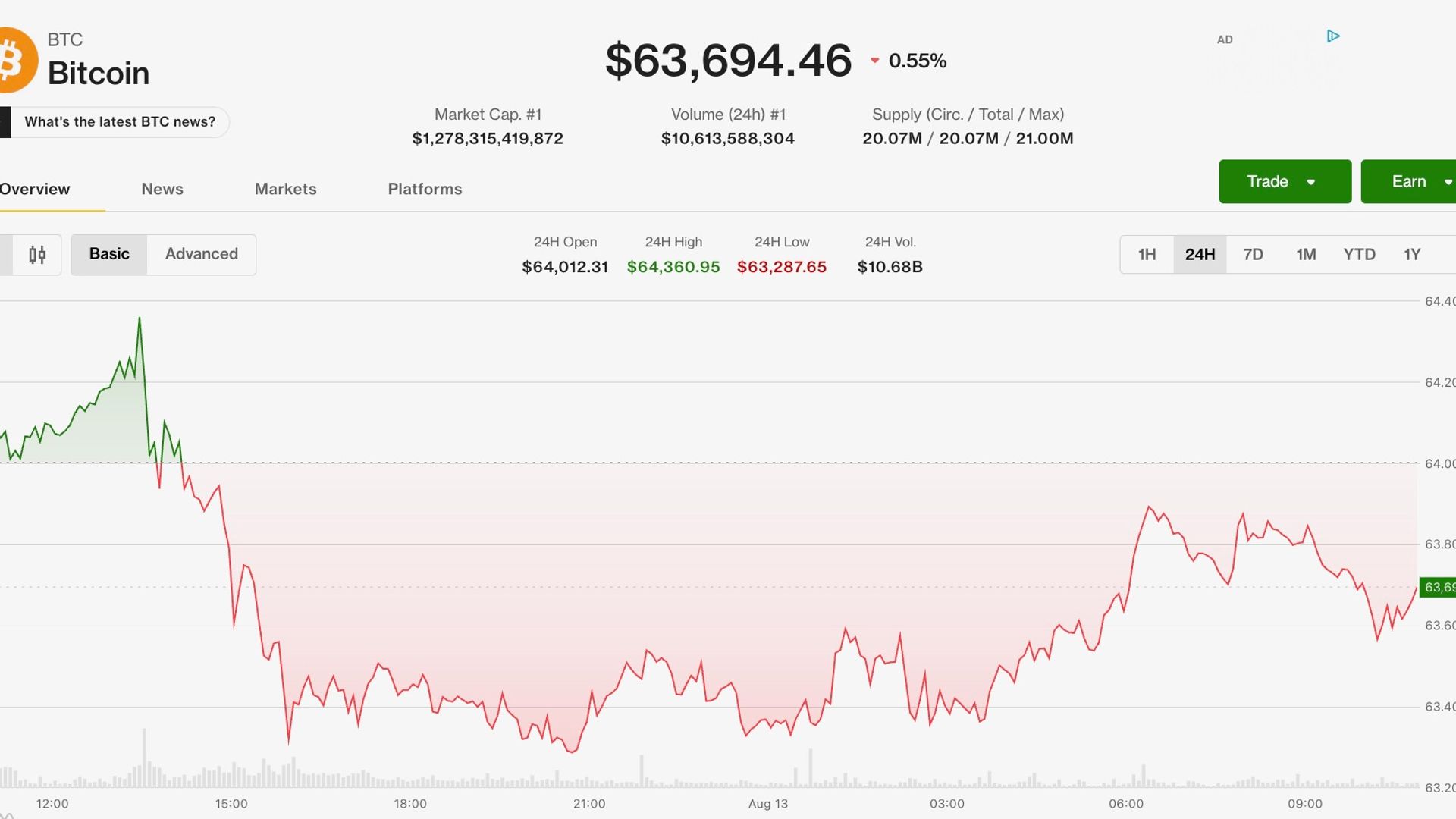
Bitcoin is currently locked in a consolidation phase near the $64,000 mark, reflecting a broader 'wait-and-see' sentiment across the digital asset space. This lateral movement follows the recent U.S. Consumer Price Index (CPI) release, which provided enough cooling evidence to prevent a sell-off but lacked the dovish punch needed to spark a major breakout. Consequently, institutional liquidity remains cautious, keeping the flagship crypto within a tight trading corridor.
From a macro perspective, the lack of volatility suggests that the market has fully priced in current expectations for the Federal Reserve's interest rate trajectory. While the geopolitical landscape remains tense, the primary focus for crypto investors has shifted to domestic economic indicators and the potential for a liquidity injection later this year. Until a clear catalyst emerges from the labor market or additional inflation prints, the current range-bound regime is likely to persist.
Despite the stagnation in major caps, idiosyncratic moves are appearing in the altcoin sector. Monero (XMR) has outperformed the market as privacy narratives regain traction, while Hyperliquid's momentum underscores a growing appetite for high-performance decentralized exchange (DEX) infrastructure. This divergence indicates that while 'beta' is stalling, capital is rotating into specific niches with strong fundamental or technical drivers.
Traders should keep a close eye on the $62,000 support level and the $66,000 resistance zone. A sustained daily close outside of this range will likely dictate the market's direction for the remainder of the month. Investors should also monitor upcoming FOMC minutes for any hints of a policy shift that could disrupt the current low-volatility holding pattern.