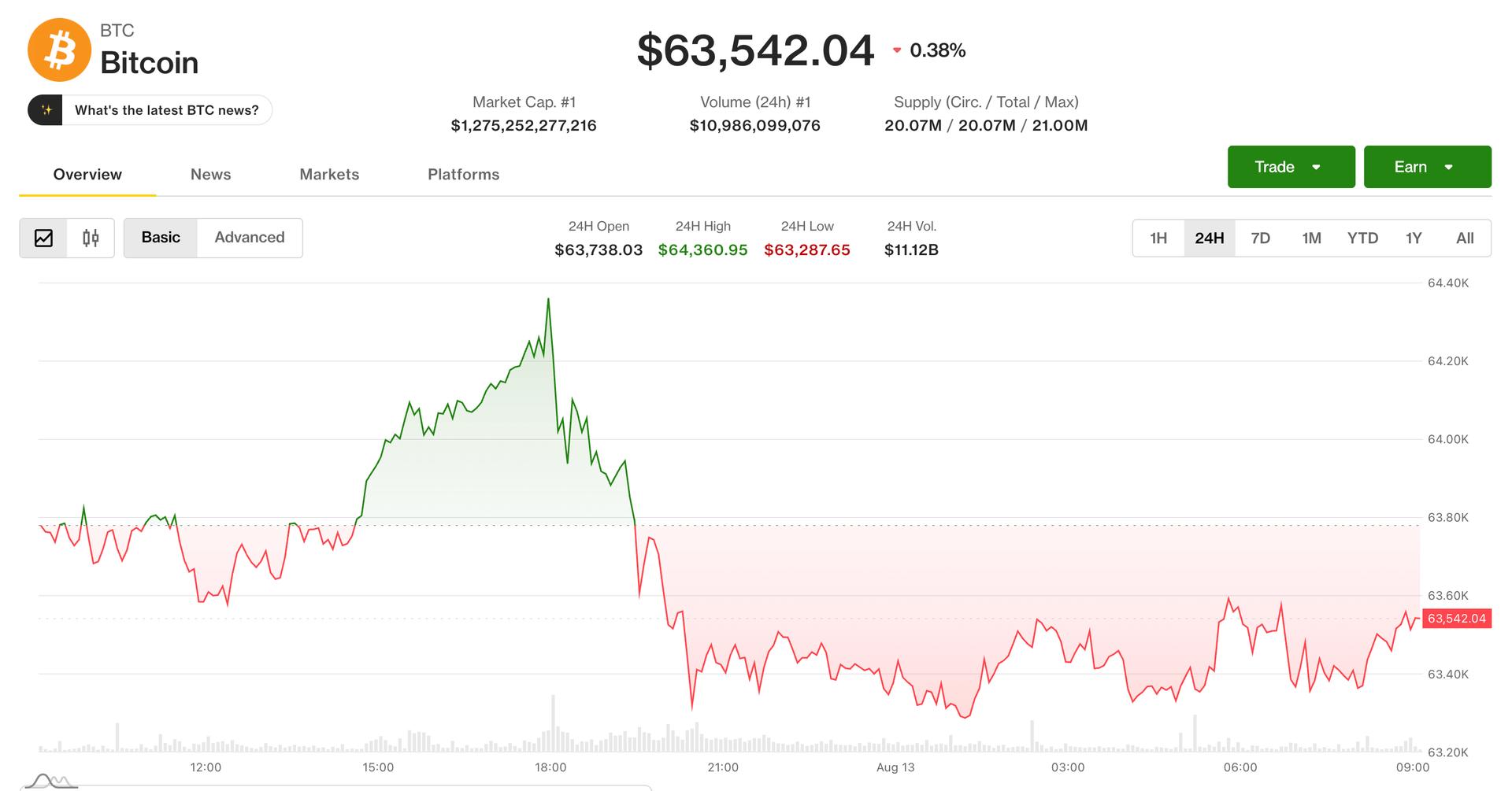
Bitcoin (BTC) saw modest volatility before settling near the $63,500 mark following the latest U.S. CPI print. While the inflation data aligned with market expectations—effectively removing the "tail risk" of a sudden hawkish pivot—the lack of a positive surprise left bulls without the momentum needed to break through immediate resistance levels. This consolidation suggests that the market has already priced in the current inflationary trend, requiring a new catalyst to move the needle.
The current macro environment is dominated by the Federal Reserve’s restrictive stance. With the CPI hurdle cleared, the narrative now shifts to the Fed's upcoming Jackson Hole Symposium. Traders are looking for definitive hints regarding a potential rate cut in September, as the "higher-for-longer" regime continues to weigh on the liquidity of risk assets like cryptocurrencies. Any deviation from expected dovishness at this event could trigger a spike in volatility.
Beyond central bank rhetoric, labor market health has emerged as the primary driver for crypto price action. Market participants are increasingly sensitive to jobs data, as a cooling labor market could bolster the case for more aggressive rate cuts. This shift in focus indicates that crypto is trading less as a niche asset and more as a barometer for broader U.S. macroeconomic stability and dollar strength.
For investors, the near-term outlook remains cautious. While the removal of inflation-related tail risk provides a safety net, Bitcoin lacks the buy-side pressure to reclaim previous highs without a shift in Fed policy. Key levels to watch include the $62,000 support zone and the reactions to upcoming non-farm payroll data, which will likely dictate whether the current range-bound trading leads to a breakout or a deeper correction.