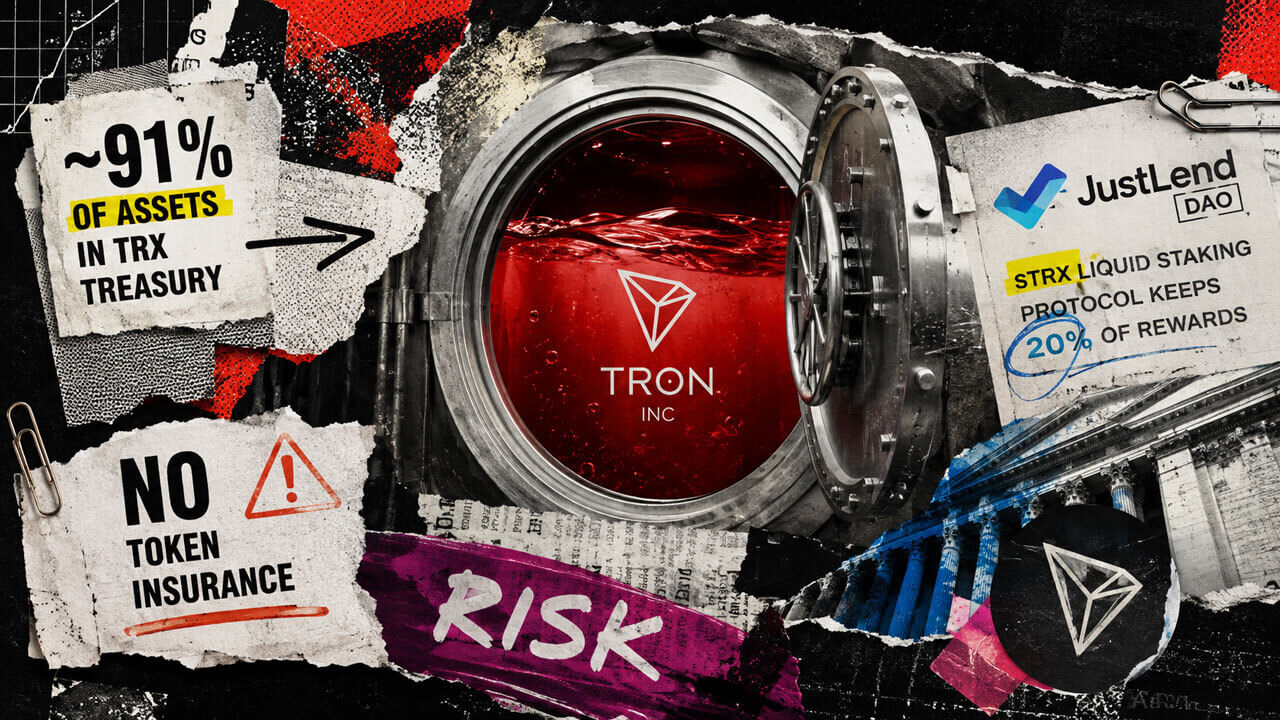
Recent financial analysis reveals that Tron Inc. has moved over 90% of its native TRX treasury into sTRX, the liquid staking token of the JustLend protocol. While this strategy maximizes yield generation for the treasury, it introduces substantial systemic risk by tethering the organization’s solvency to the security and liquidity of its own internal DeFi ecosystem. This concentration is particularly notable as sTRX lacks any form of third-party insurance, leaving the treasury vulnerable to protocol-level exploits or smart contract failures.
From a market perspective, the 14-day withdrawal window required to convert sTRX back to native TRX creates a potential 'liquidity trap.' In the event of a black swan market crash or an emergency requiring immediate capital intervention, Tron Inc. would be unable to access the bulk of its assets to stabilize the ecosystem or defend the TRX price floor. This recursive dependency mirrors high-risk patterns seen in previous cycles where foundations became overly reliant on their own derivative products to inflate treasury valuations.
Traders and investors should closely monitor the total value locked (TVL) in JustLend and any regulatory developments surrounding Justin Sun and the Tron ecosystem. In a high-volatility scenario, the inability to quickly liquidate treasury holdings could lead to extreme price slippage if the foundation is forced to exit positions. Watch for any shifts in the TRX/USDT peg and the health of the JustLend reserve ratios, as these are now the primary indicators of Tron's corporate liquidity health.