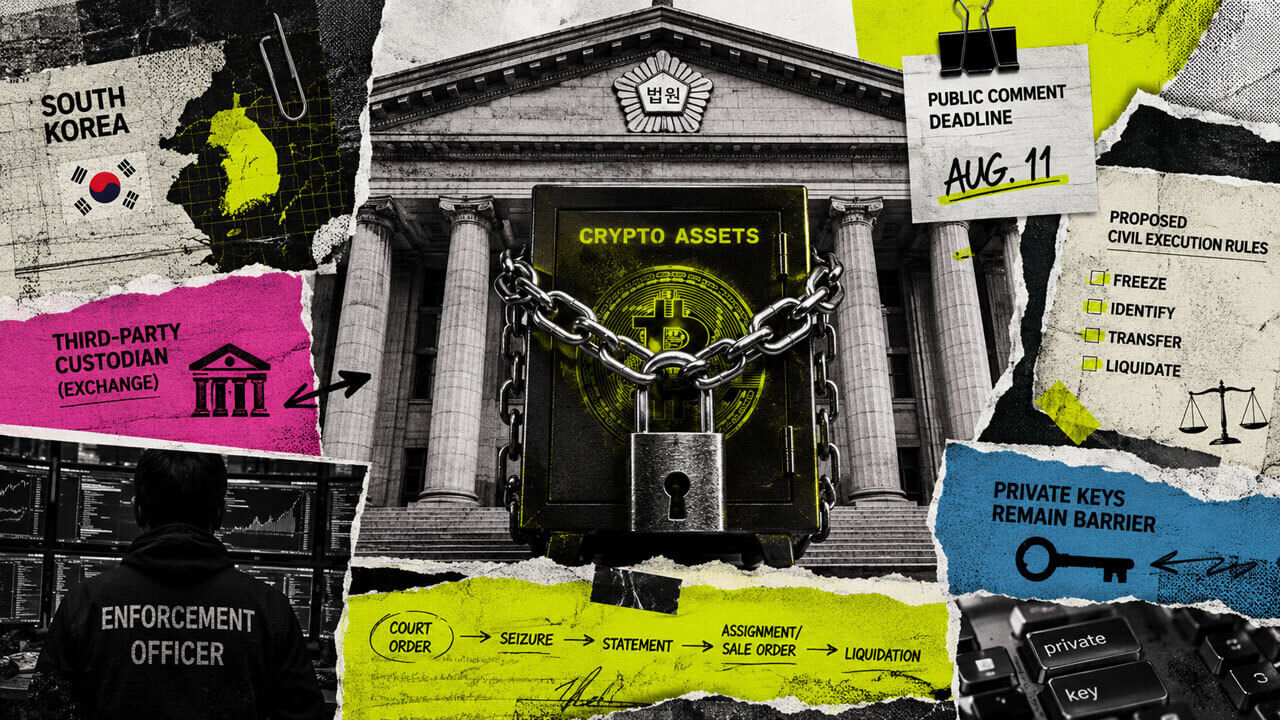
South Korea is set to implement a new regulatory framework that imposes a strict seven-day deadline for cryptocurrency exchanges to process asset seizure requests. Under these rules, civil creditors can legally compel custodians to freeze, disclose, transfer, or liquidate a debtor's digital assets. This mandate covers a wide range of actions, including the forced swapping of tokens to satisfy outstanding debts, effectively removing the perceived 'safe haven' status of crypto for individuals avoiding civil judgments.
This development follows South Korea’s ongoing effort to bring the digital asset industry into full compliance with established financial standards. By empowering civil creditors with tools traditionally reserved for banking institutions, the government is signaling a mature, albeit more restrictive, approach to crypto custody. These rules are part of a broader regulatory push, including the Virtual Asset User Protection Act, aimed at cleaning up the local market and enhancing transparency for all participants.
For market participants, these rules could lead to temporary localized sell pressure if large quantities of seized assets are liquidated on the open market to satisfy creditors. Investors should monitor how major domestic exchanges like Upbit and Bithumb implement these protocols, as operational compliance will be a key metric for regulatory standing. In the long term, this move signals that the era of regulatory arbitrage in major Asian hubs is closing, favoring institutional-grade compliance over anonymity.